Restoration coatings · composition roofs
Roof Coat
Roof Coat is a 100% acrylic elastomeric restoration coating for composition roofs. It is a film that sits on the shingle, not an oil that soaks into it. The specific product and its manufacturer data sheet are named on your estimate.
Roof Coat is a film a reinspector can see. It does not reset the install year. It is not a new roof. It is not Roof Maxx oil and it is not a Brite Maxx wash.
Roof Maxx goes INTO the shingle. Roof Coat goes OVER it. The oil is absorbed and leaves nothing on the surface. The coating stays on top as a film. Two different jobs. We do not blend them.
When Roof Coat is the path
Composition that no longer qualifies for rejuvenation: heavy granule loss, exposed mat, or a carrier that wants to see a uniform, resolved surface. Color change lives on this path too. Fifteen finish colors.
Roof Maxx oil does not put granules back and does not leave a film a reinspector can score from the street. Brite Maxx is a wash. Neither one is Roof Coat.
What it looks like on a roof
What the roof looked like first
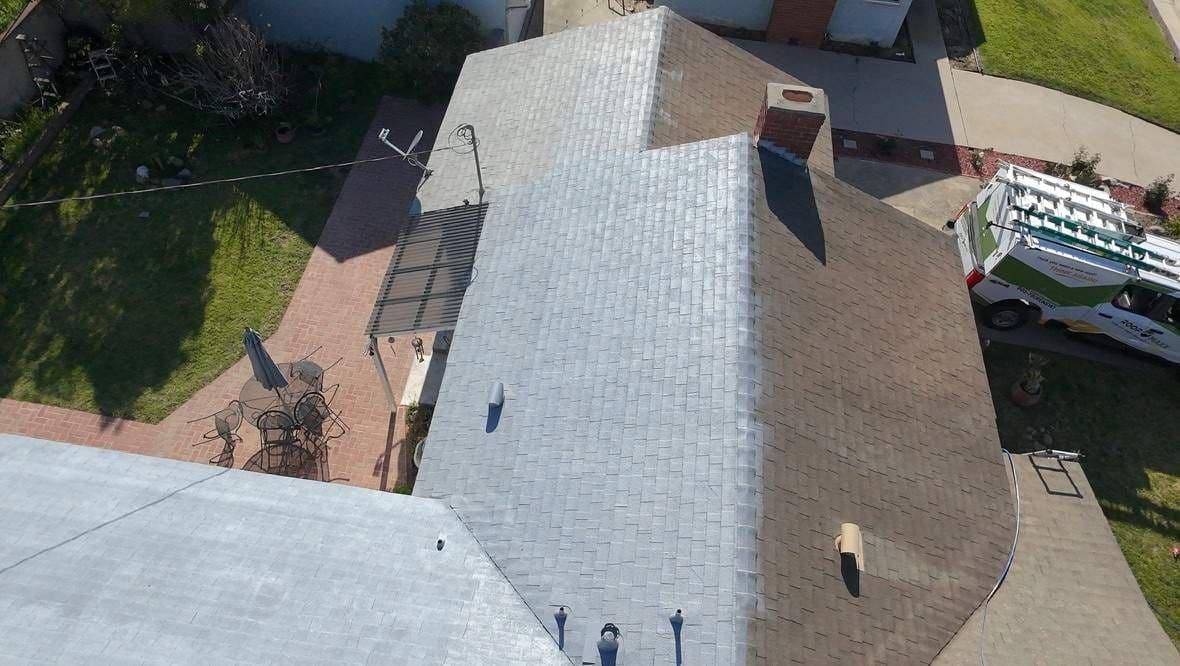
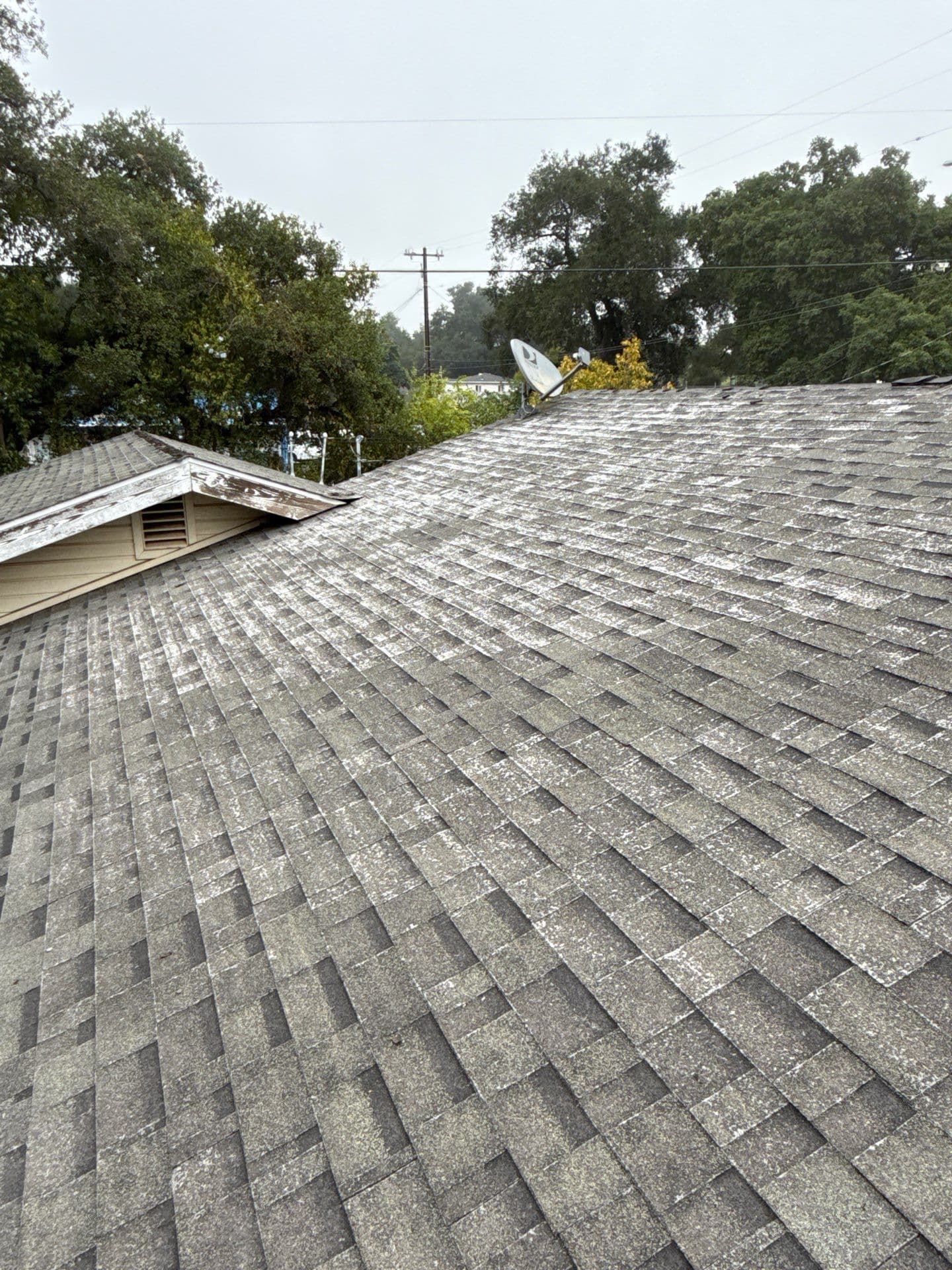
This section and the next one are a single roof in Ojai, photographed on the inspection, again on the morning of the job, and again when it was done. Start here rather than at the finished color: this is the condition that puts a roof on the coating path instead of the oil one.
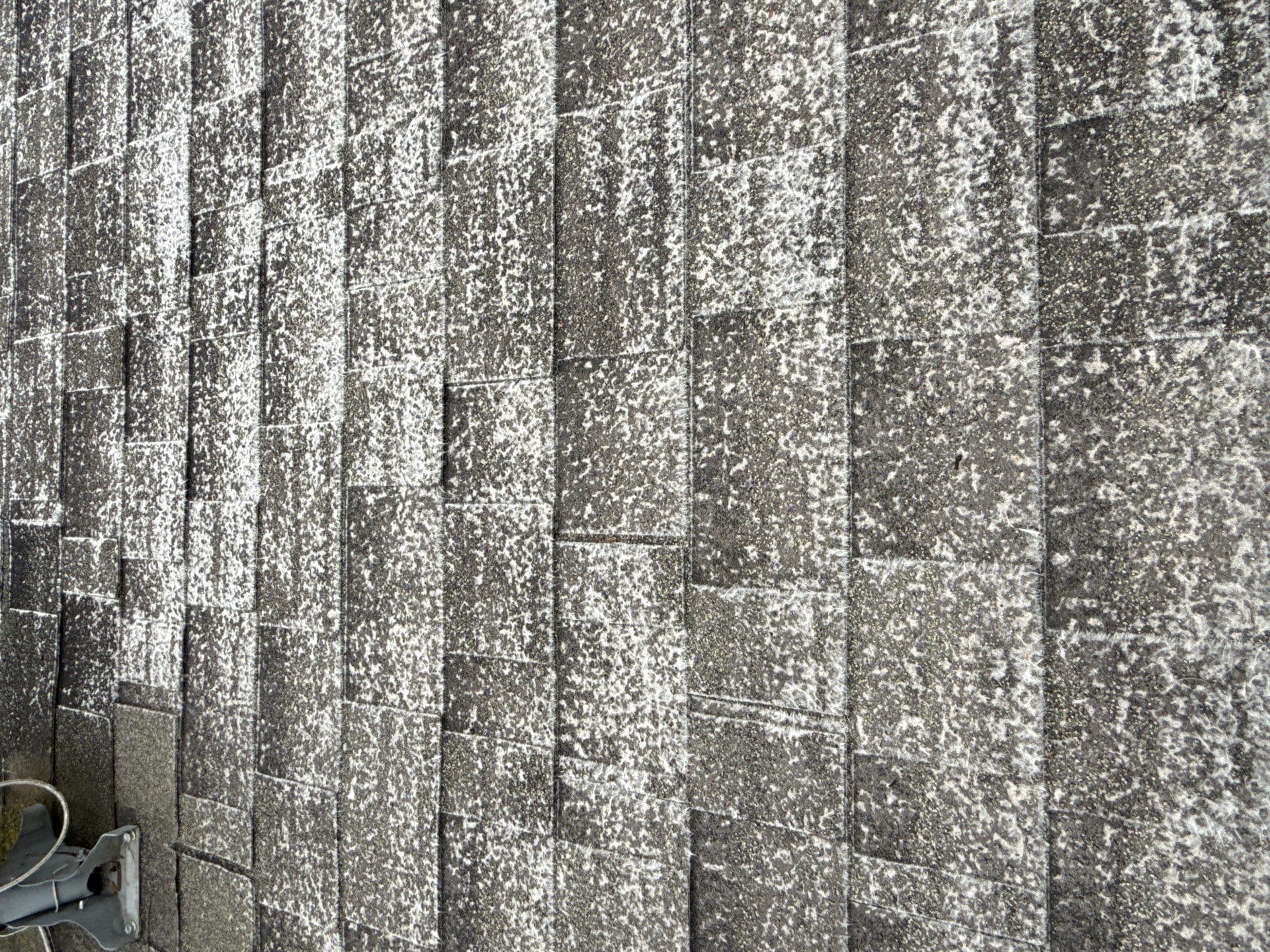
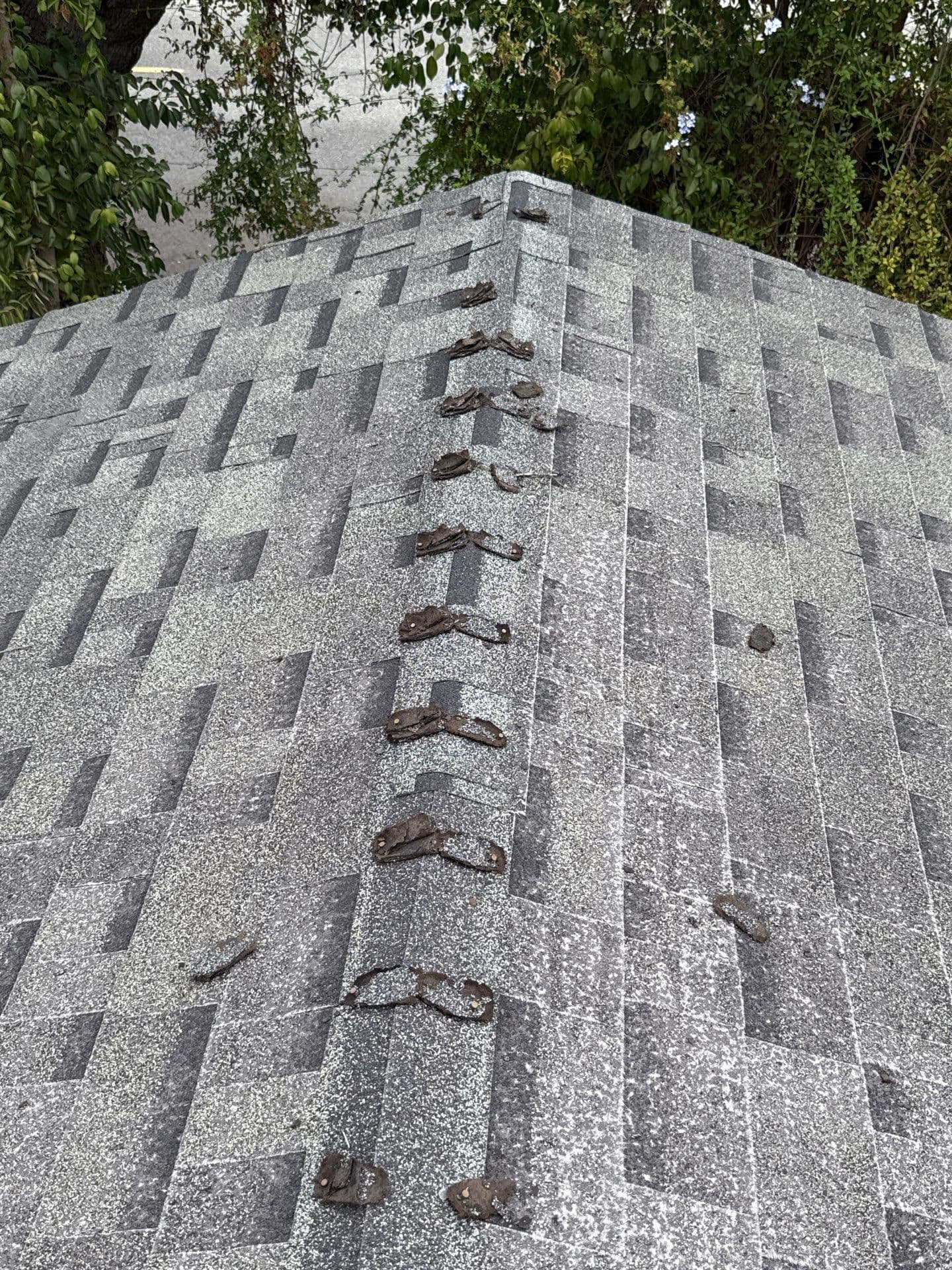
The pale patches are not dirt. They are the fiberglass mat showing through where the granules have worn off, and they run across every tab in the frame rather than collecting in one wind-scoured corner. Granules are the shingle's sunscreen. Once enough of them are gone, rejuvenating oil has nothing left to protect — which is the whole reason this roof got a film instead of a treatment.
The hip tells the other half of it. Somebody had been walking this roof with a tube of sealant, dabbing the cap shingles one at a time. Spot repairs like that are a homeowner buying months. They are also a fair sign the roof has stopped being weathertight on its own and needs a decision rather than another dab.
Later the same day, before a drop of anything was sprayed: the flue is already wrapped and taped. Masking is most of the morning on a coating job and it is the part nobody photographs, so here it is.
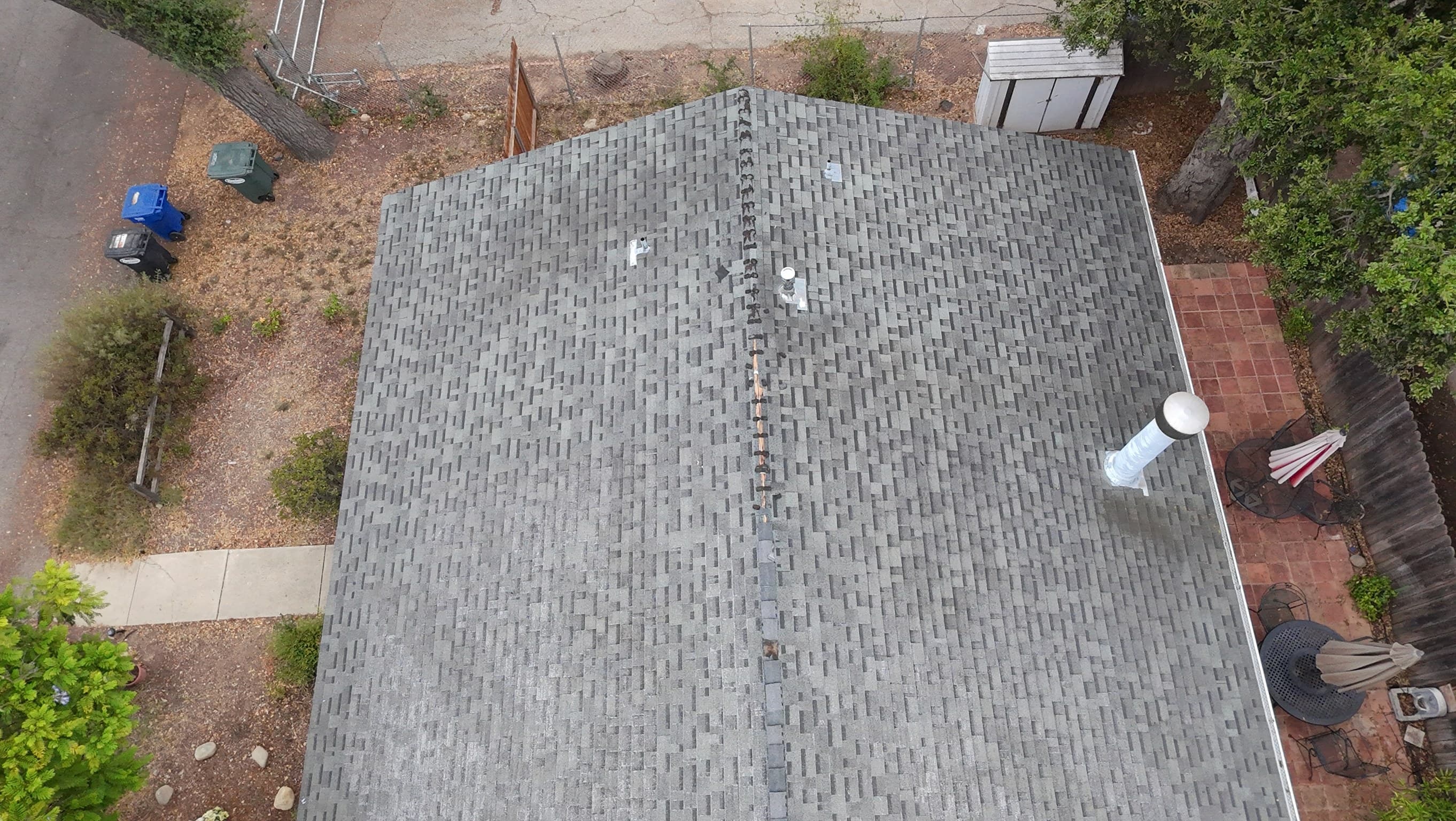
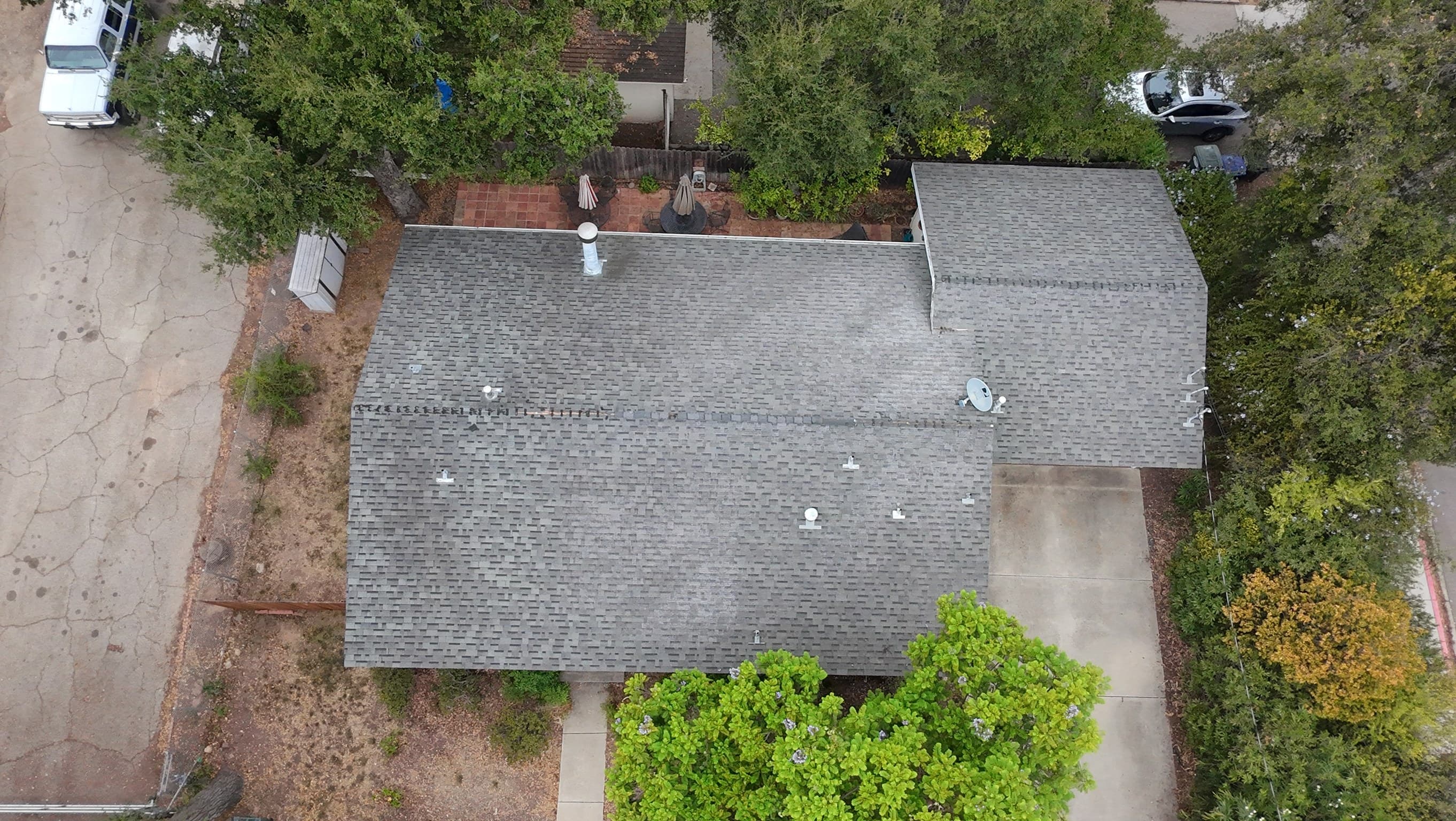
From above, the wear has no shape to it. There is no scoured corner and no single bad slope to cut out and patch, just an even gray across every plane — which is what turns a repair conversation into a whole-roof one.
The same roof, finished
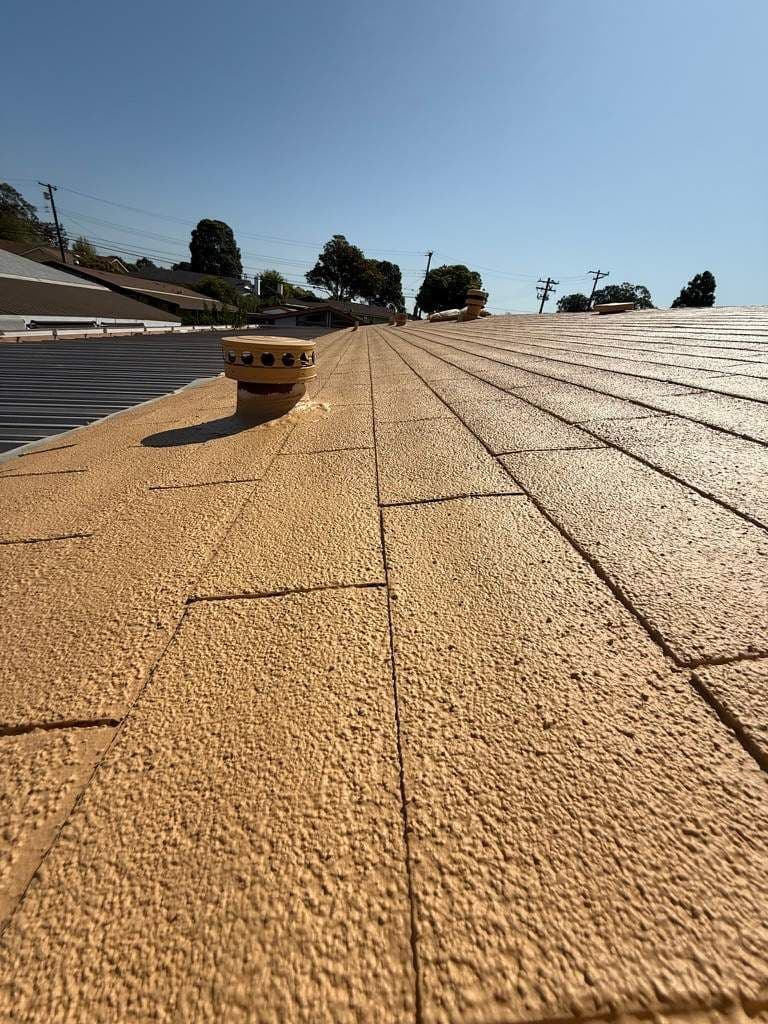
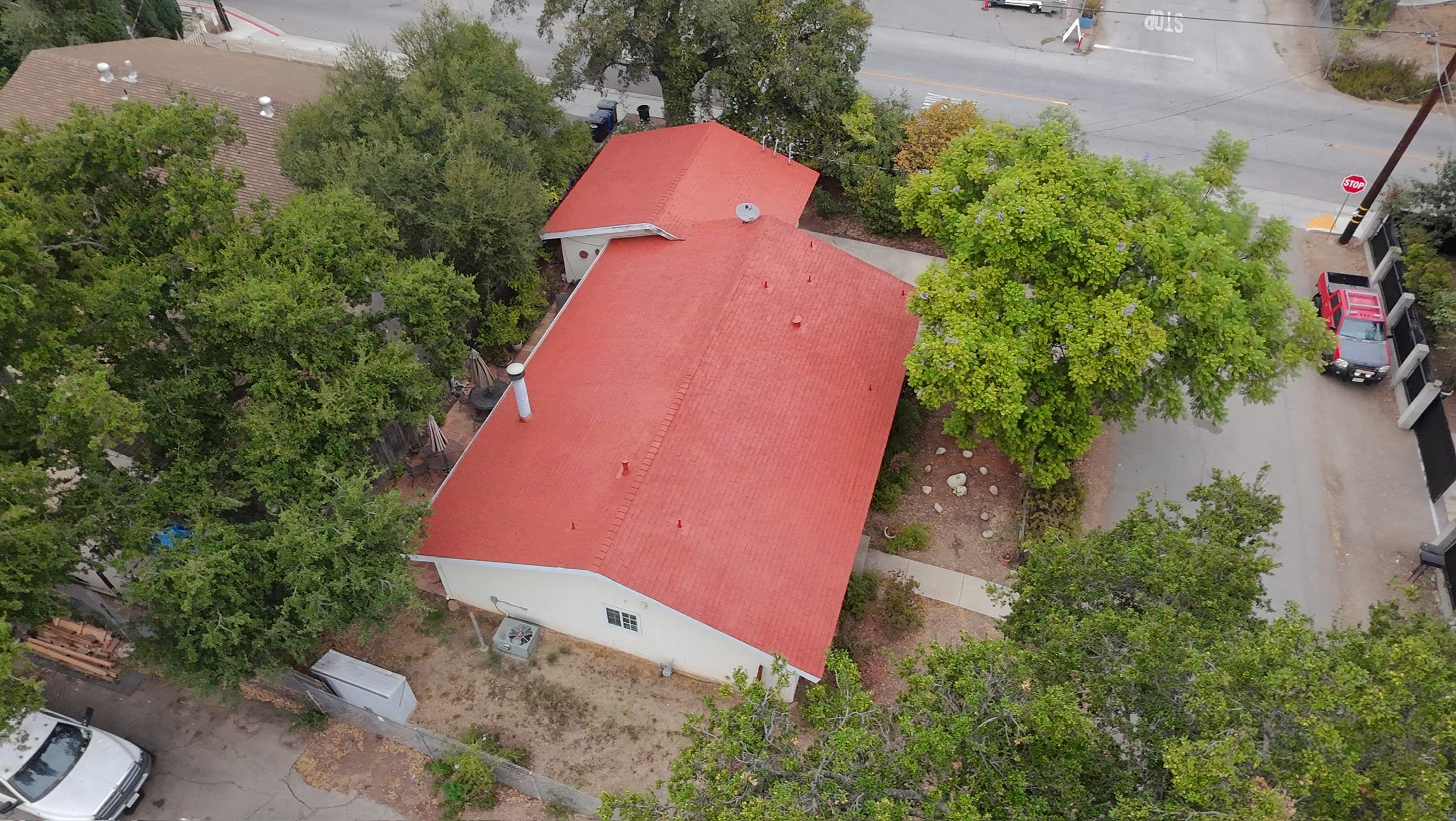
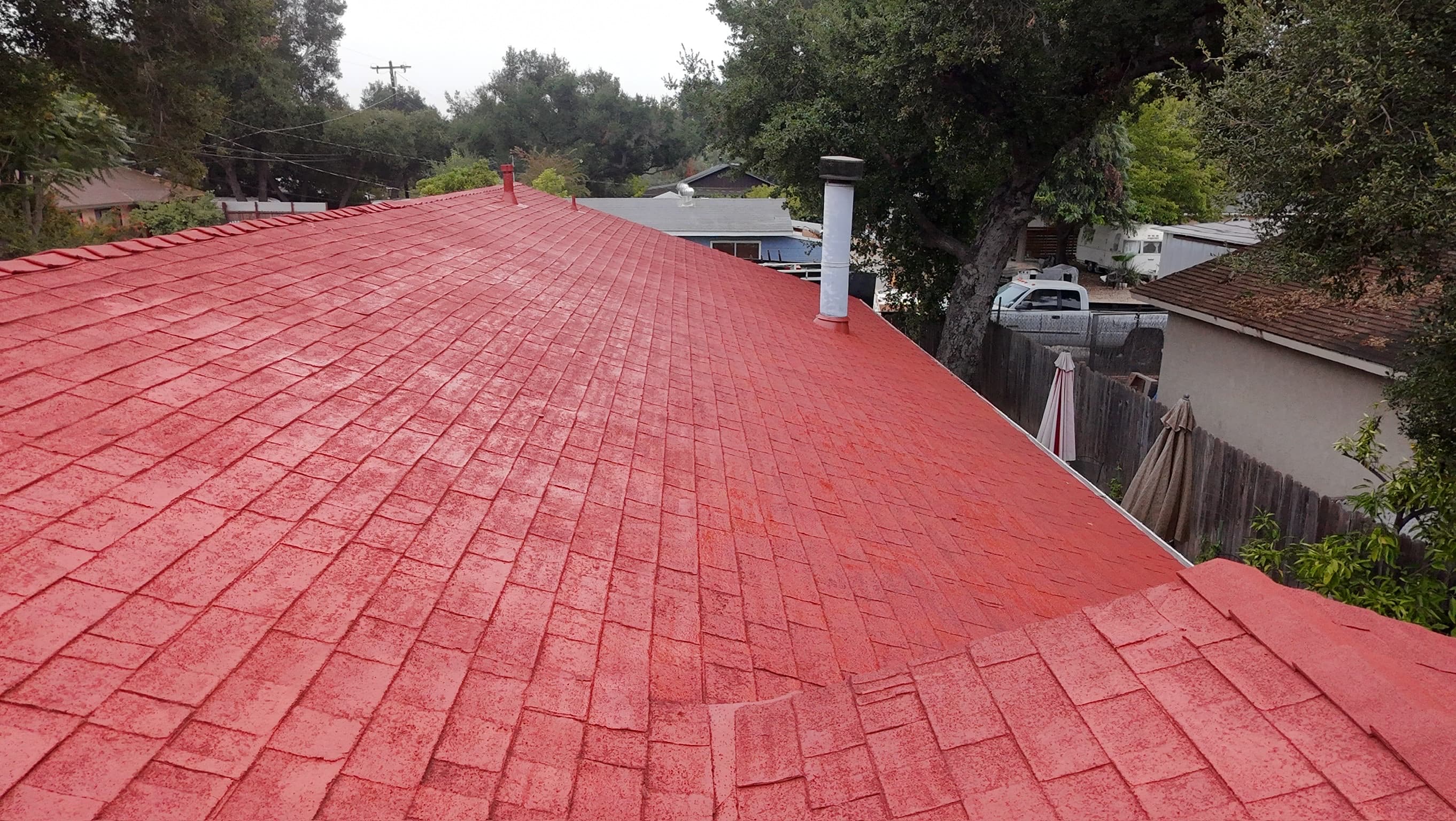
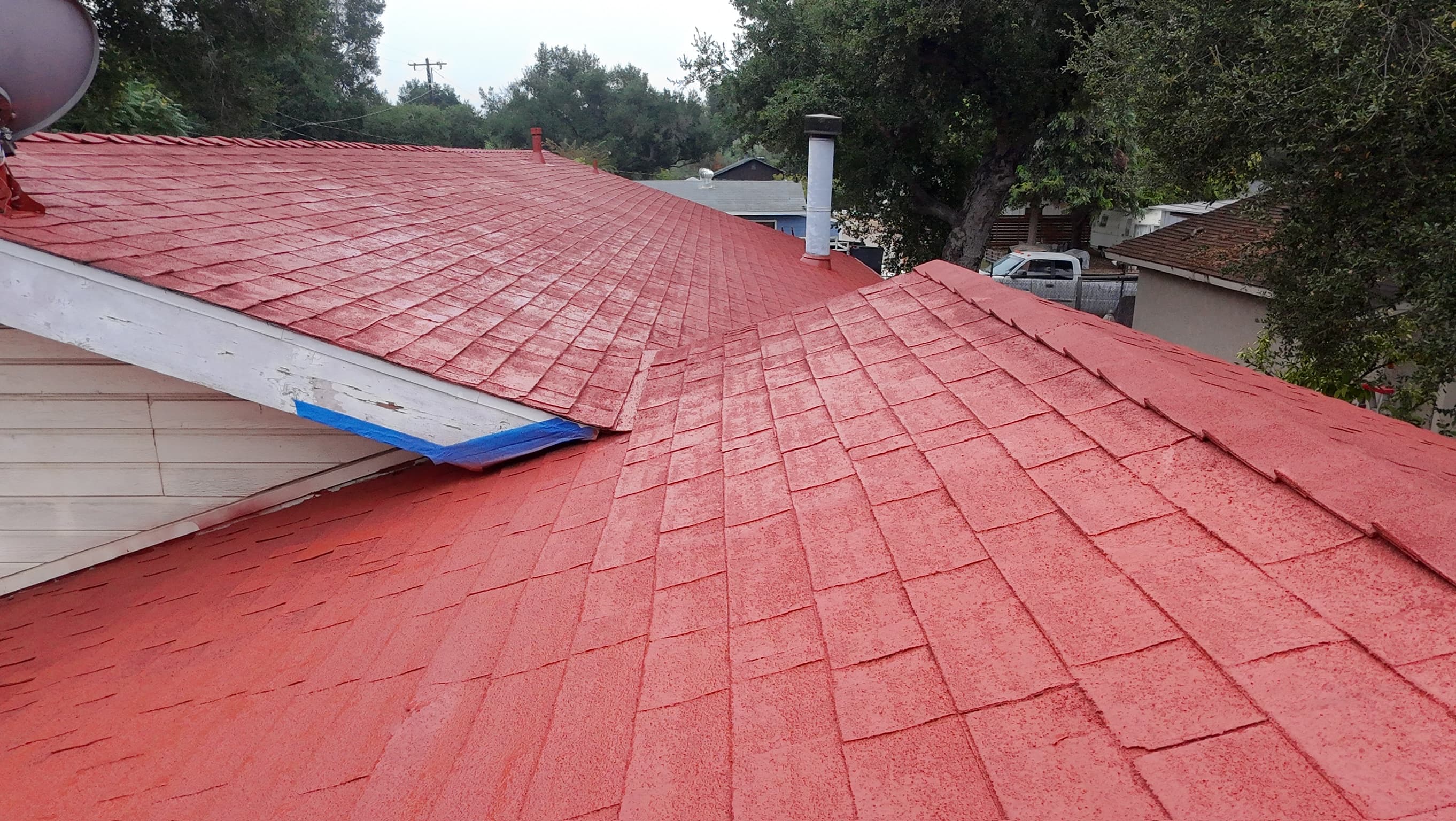
Gray when we got there and terracotta when we left — the aerial above and the one below are the same drone position. Color is the part homeowners think about first and the smallest decision on the job; whichever finish you pick, the film underneath is the same.
Up close the film sits on the shingle instead of flattening it. Every butt line still reads, and so does the wear underneath, because the coating follows the surface it is on rather than burying it. A roof that has been coated should still look like a roof.
Where the film stops matters as much as where it goes. Trim, flashing, and wall lines get masked before the first pass, so the edge is a cut line instead of feathered overspray on someone's fascia.
This one had an insurance tail
Months later the homeowner's agent asked for proof the roof had been replaced. It had not been, and we were not going to say it had — the work was a full tune-up and a complete Roof Coat, which is the color change you just looked at. We put exactly that in writing and the agent accepted the documentation.
What we do when a carrier asksWhen the substrate is not composition
Low-slope, metal, and ponding roofs need a different film — acrylic reflective or silicone, chosen by slope and by where the water goes. Those are not Roof Coat, but they are still our work. Ask on the same call.
Cool-roof requirements depend on your roof's slope and climate zone. Low-slope roofs are regulated statewide; most pitched shingle roofs in coastal Ventura County face only a modest requirement or none. We confirm the exact requirement with Building & Safety on every job.
When one house needs both
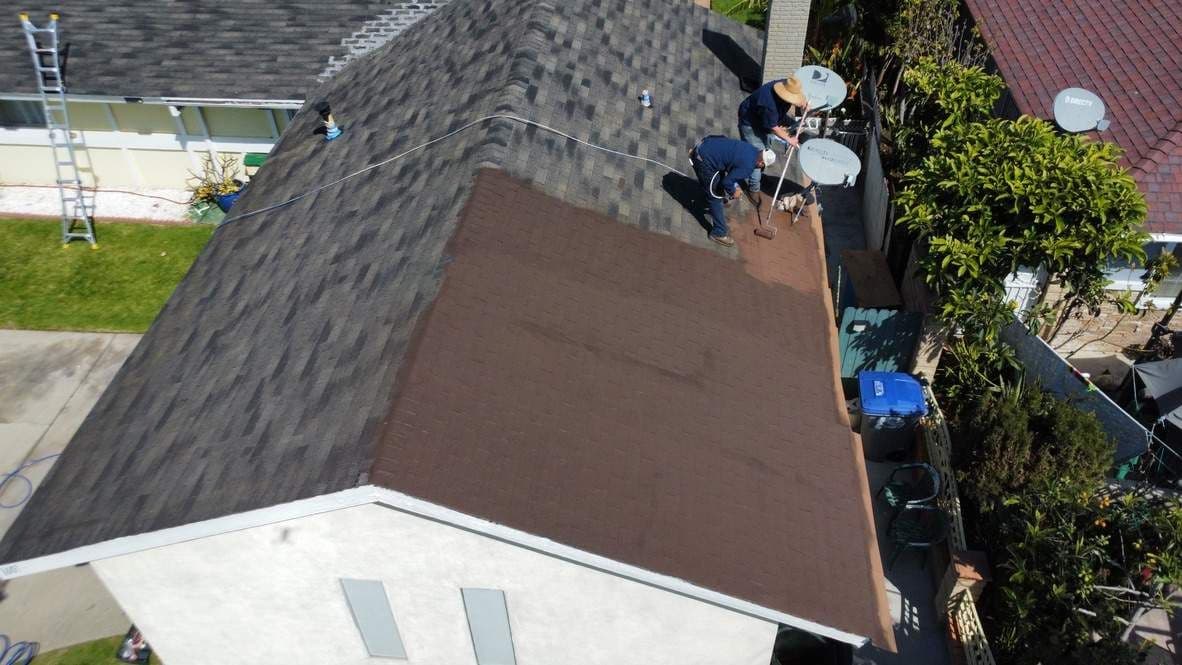
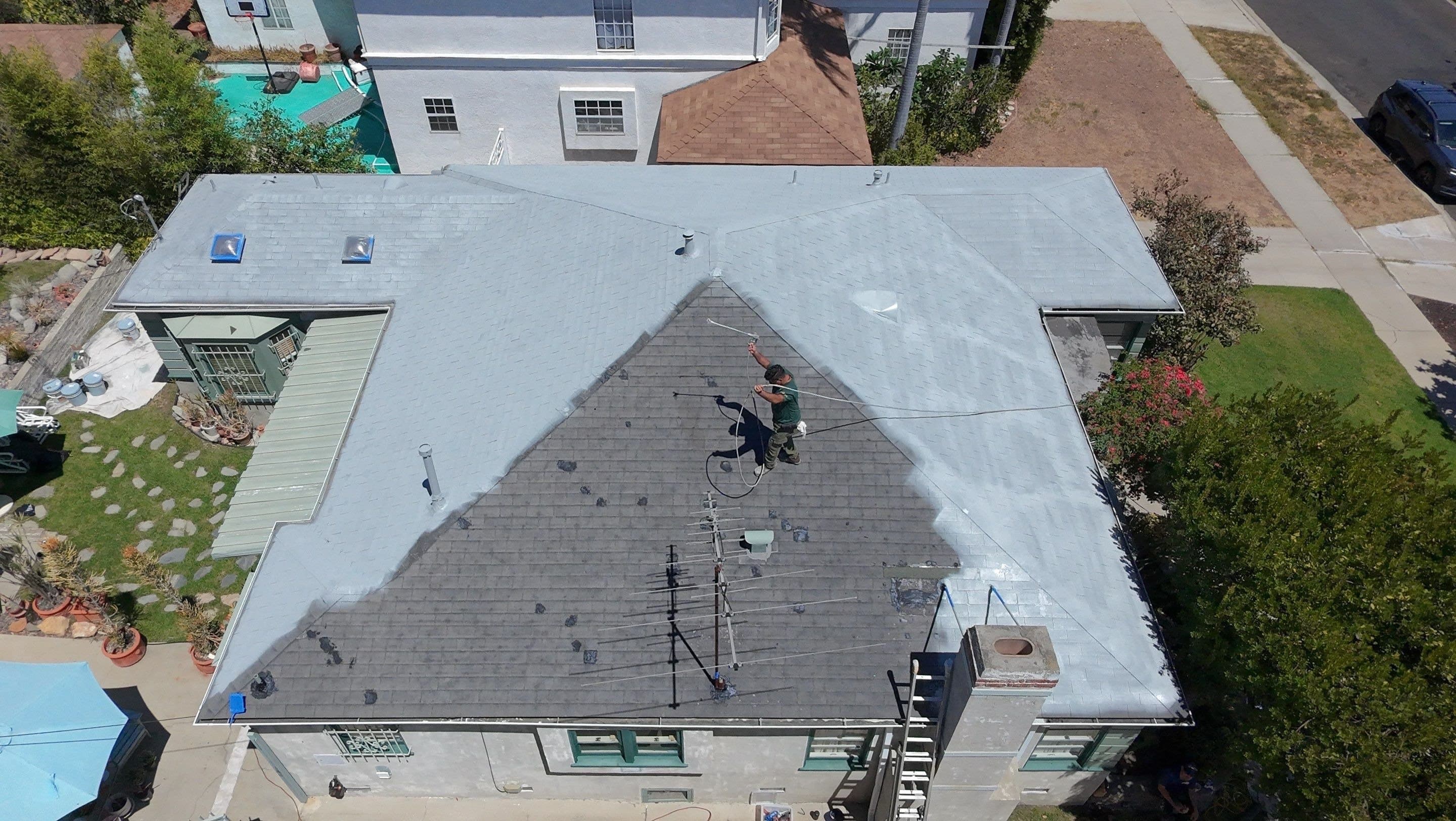
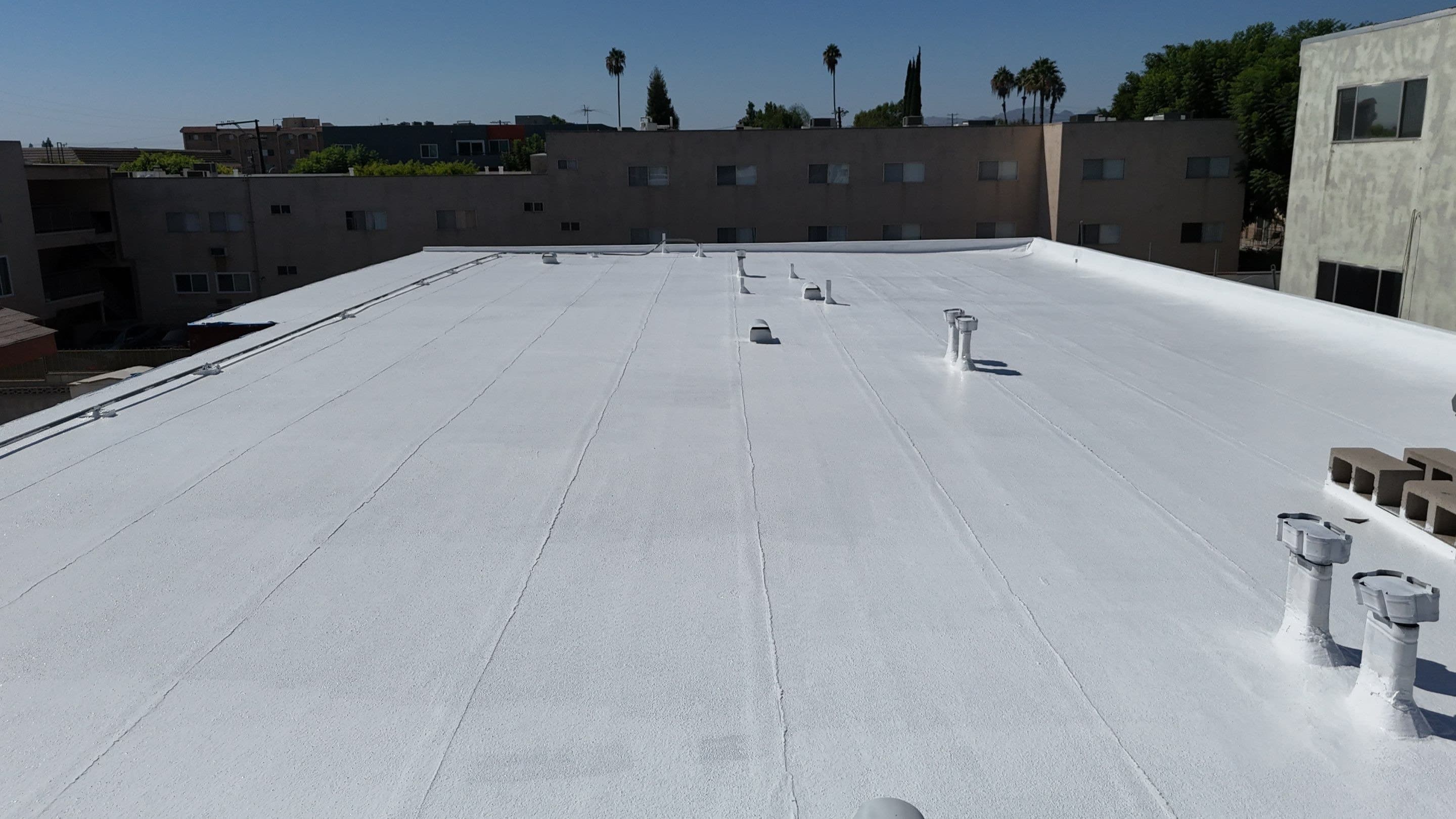
This house in Thousand Oaks came to us as a rejuvenation call, and the steep composition hip got exactly what a rejuvenation call gets: the full tune-up first, then the Roof Maxx pass. But the house does not end at that ridge. Behind it sits a second roof, nearly flat, and it is not shingle at all — it is rolled asphalt laid in overlapping courses. Oil is a shingle treatment. It has nothing to offer a roof whose weak point is its seams.
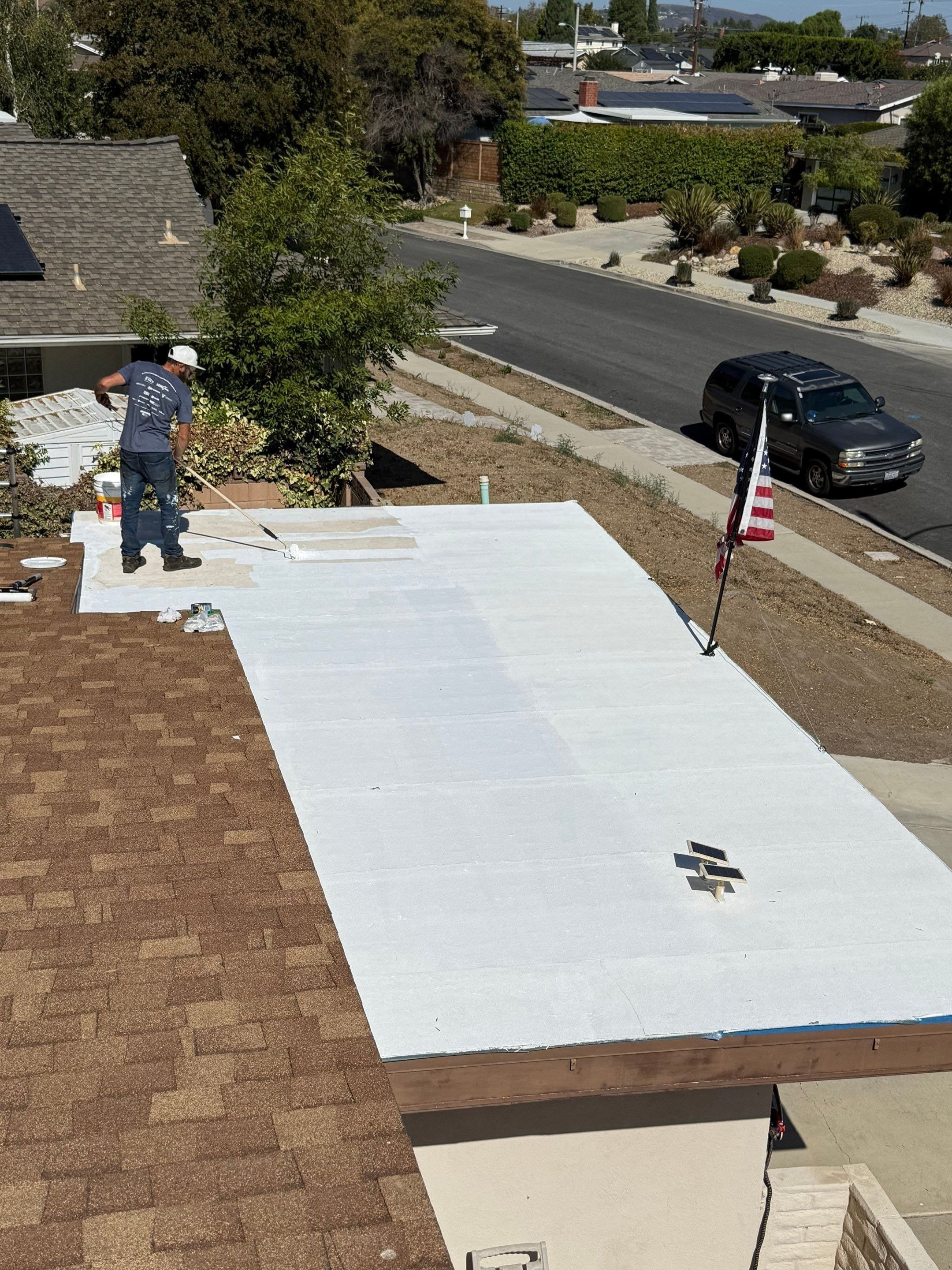
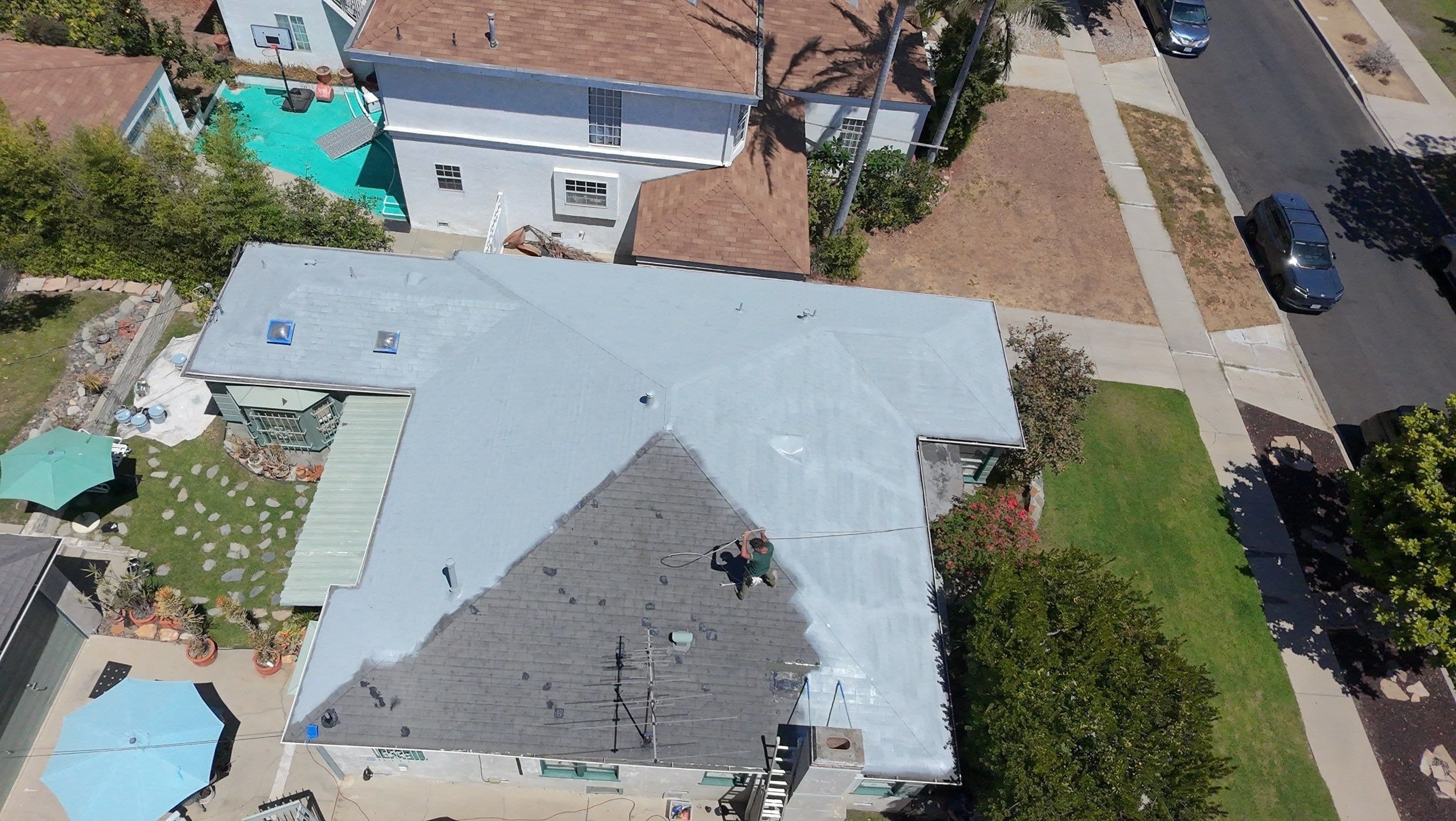
So the two halves got two different jobs on the same visit. Left of the ridge, oil going into the shingle. Right of it, a white elastomeric going on top of the rolled asphalt — over the field and over every lap, because the laps are where a rolled roof gives up first. The crew member in the frame is standing right on the line between the two scopes, roller pole in hand, with the pail beside him.
The drone went up while the coating was going down, so the shingle side in these frames is just the roof. The oil went on the same day. What a fresh pass of it looks like is on the rejuvenation page, not here.
What the white is doing
Two things, and they are worth keeping separate. The first is water. A low-slope deck does not shed, it holds, and every lap and every penetration is somewhere for standing water to work at. A coating goes over the field and the laps as one continuous film, which is the reason a roof like this gets coated instead of patched — a sound deck under a fresh film keeps going, and a patched one keeps needing patches. Where water truly sits rather than drains, that film is silicone instead of acrylic — slope and drainage pick the product, not preference.
The second is heat, and it is what this homeowner called about.
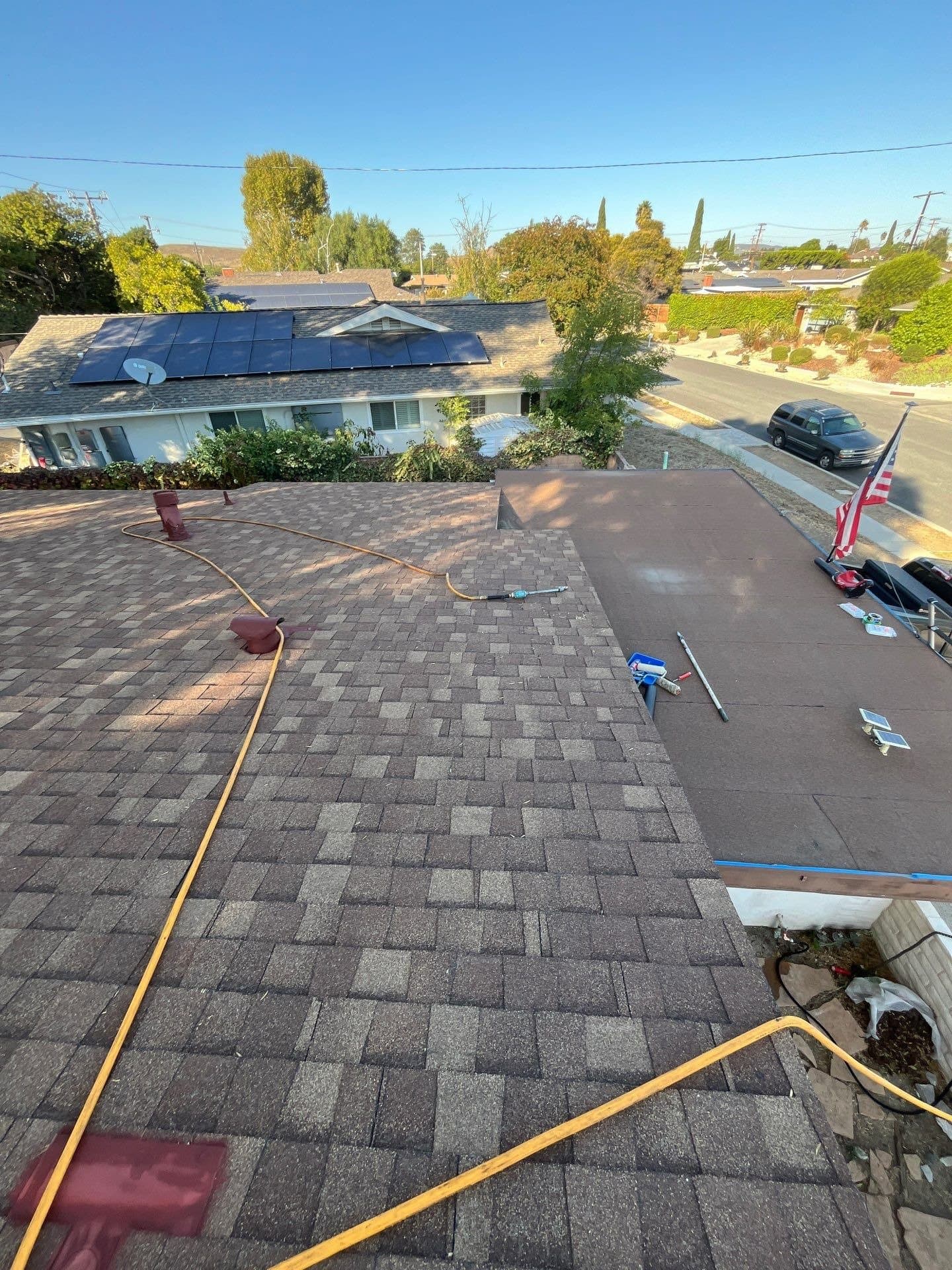
That is one deck, one sun, one moment, photographed with the job half done. Nothing separates the two halves except the film. The bare side is a gray-brown mineral cap sheet, and it spends a Ventura County afternoon taking in what lands on it. The white side turns a good deal of the same sunlight straight back off the roof instead of letting it become heat in the deck.
We are not going to put a number on your cooling bill. What the roof does with the sun is one input; insulation, whether the ducts run through the attic, and which way the house faces are the rest of it, and none of those are ours to promise. On a low-slope deck with rooms directly underneath, though, it is a difference people feel from inside. It is also why low-slope roofs are the ones California regulates for reflectivity statewide, while most pitched shingle roofs around here are barely regulated at all.
Warranty

Our installation warranty is 5 years and transfers with the house. It covers the application: the prep, the masking, the mil thickness, and the edges.
The manufacturer's material warranty is separate and is stated on your estimate. Two documents, two signatures on them, and we would rather you knew which is which before you needed one.
This is also not the Roof Maxx figure. That one is a product warranty on a treatment, it lives on the rejuvenation page, and it does not apply to a coating.
The low-slope and specialty films above are a different product on a different substrate, so they are quoted with their own terms rather than folded into this one. Ask for those in writing on the estimate.
FAQ
- Does a coating affect my shingle warranty?
- Most roofs we coat are past the manufacturer's warranty period. If yours isn't, we'll tell you before you decide.