Annual maintenance plan · one or two visits a year
Annual maintenance plan
Roofs here rarely fail all at once. They fail at one pipe boot, one lifted tab, one valley packed with oak leaves, and then it rains. A scheduled visit catches those while they are still the cheap version of themselves.
Once a year, or twice
Plan 1×
One visit a year
Scheduled in the fall, before the first real rain. This is the right plan for most single-family houses in the county: pitched composition, clear of heavy tree cover, no low-slope sections, nothing unusual up there.
Plan 2×
Two visits a year
Fall before the rain, and again in late spring after the wind season has finished with the roof. This is the one to take if you have heavy tree cover, low-slope or flat sections, tile with long valleys, a solar array, or a roof already near the end of its service life.
Both plans are priced per roof, once we have seen it. Size, pitch, access, and how much is actually growing over it change the work enough that a flat published rate would be a number we would have to walk back.
What a visit covers
Clear the roof
Leaf litter out of the valleys, off the low-slope sections, and away from anywhere it dams water. Under oaks and palms this is most of the value on its own.
Penetrations
Pipe boots, flue collars, vent flashings, skylight curbs, and the sealant at every one of them. Cracked boots are the single most common leak we find that had nothing to do with the shingle.
Flashings and terminations
Wall flashings, valley metal, drip edge, and anywhere the roof meets something that is not roof. These are where water goes when it has a choice.
Fasteners and loose material
Nail pops reset and sealed, lifted tabs re-bonded, slipped tile put back, and loose ridge caps fixed before a Santa Ana finds them.
Drainage
Gutters, downspouts, scuppers, and drains checked for flow, because a roof that cannot drain is a roof that stays wet.
Photograph everything
You get the same pictures we do, of the good and the bad, with a note on anything worth watching. Over a few years that becomes a record of how your roof is actually aging.
A visit is an inspection and minor sealing, not a repair job — anything bigger gets its own written scope.
The kind of thing a visit finds
None of these are dramatic. Every one of them is cheaper to deal with on a dry Tuesday than after it has let water into a ceiling, and none of them are visible from the street.
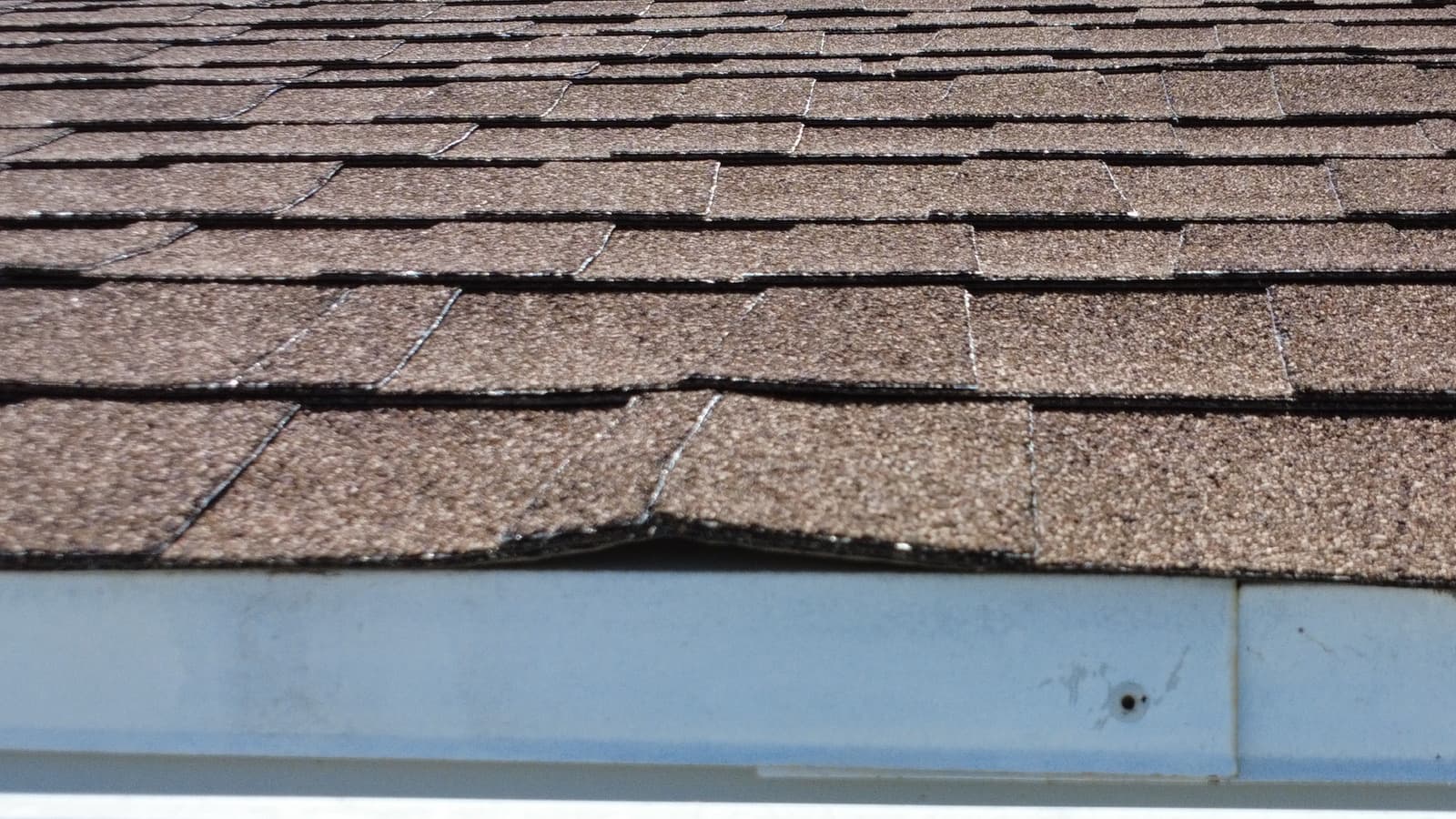
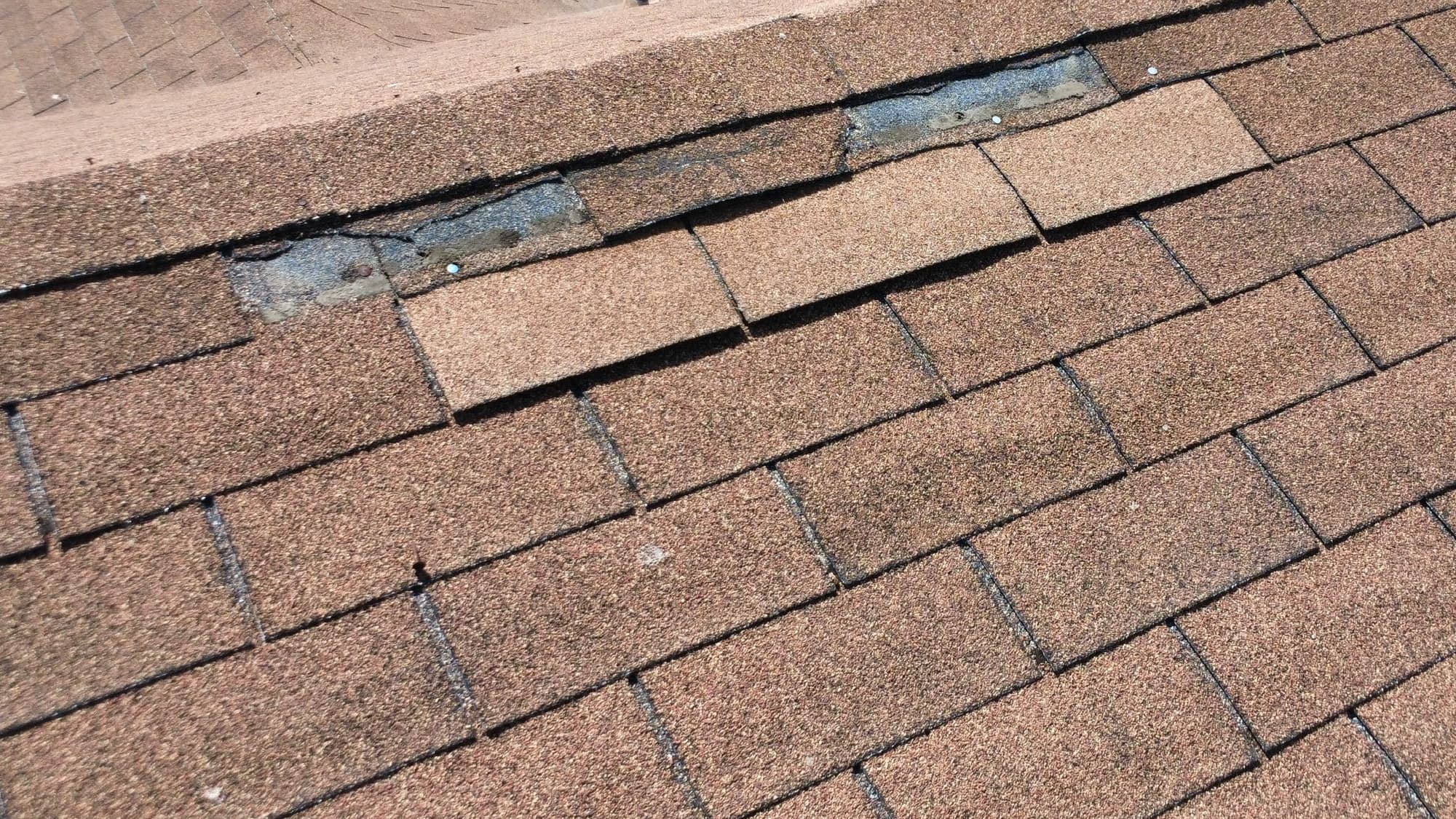
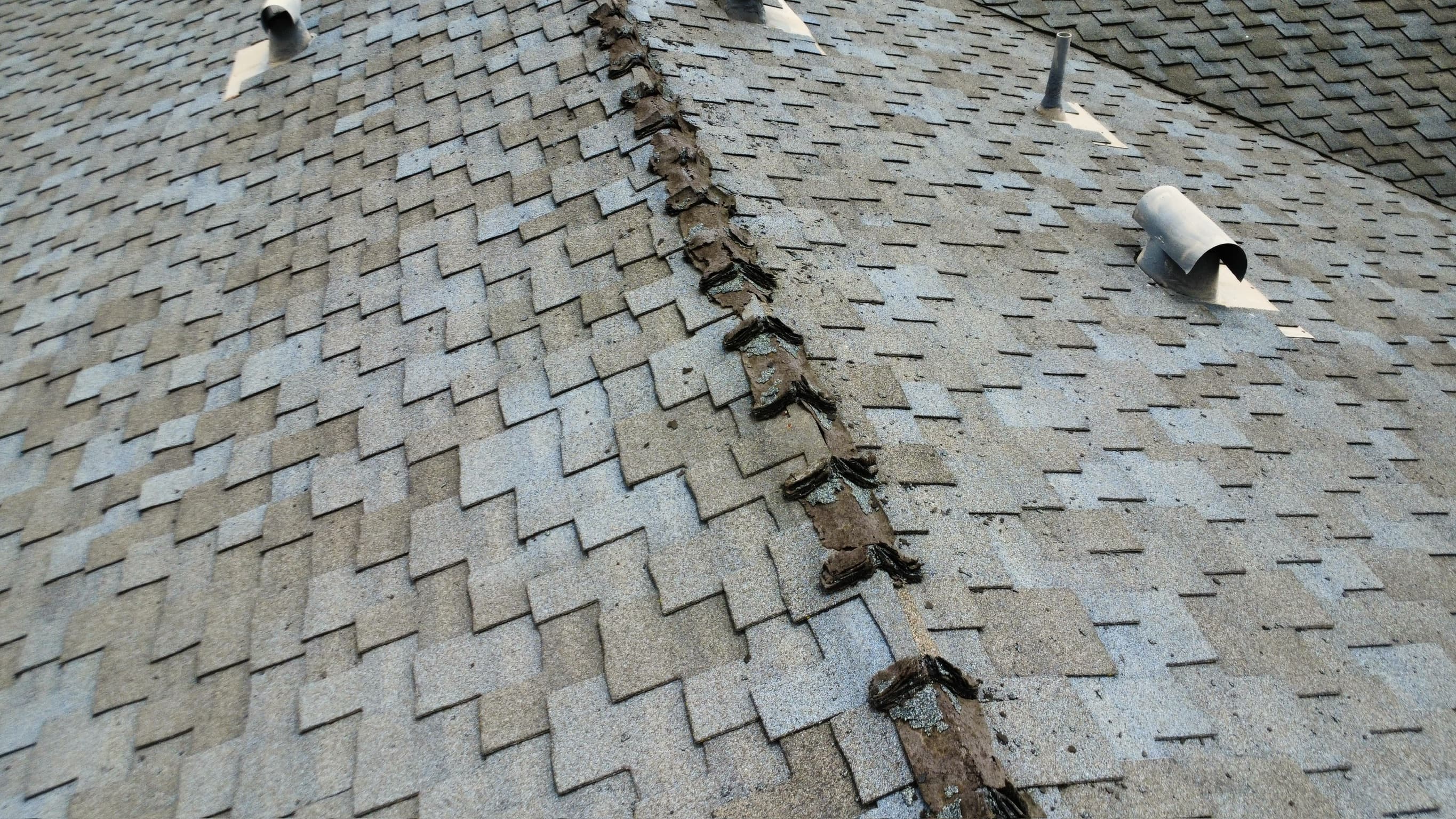
And the ones that are not small any more. A ridge that has gone like this is a line item of its own, not something a maintenance visit quietly absorbs — but it is a great deal better to hear about it in October than to find out in January.
Why the fall visit matters more here
Ventura County gives you most of a year with no rain to reveal anything, and then a few weeks that reveal all of it at once. By October a roof is carrying nine months of accumulated debris, a summer of thermal cycling, and whatever the Santa Anas moved. The first storm of the season is the worst possible time to learn what any of that did.