Commercial · Flat roofs
Commercial flat roof coatings
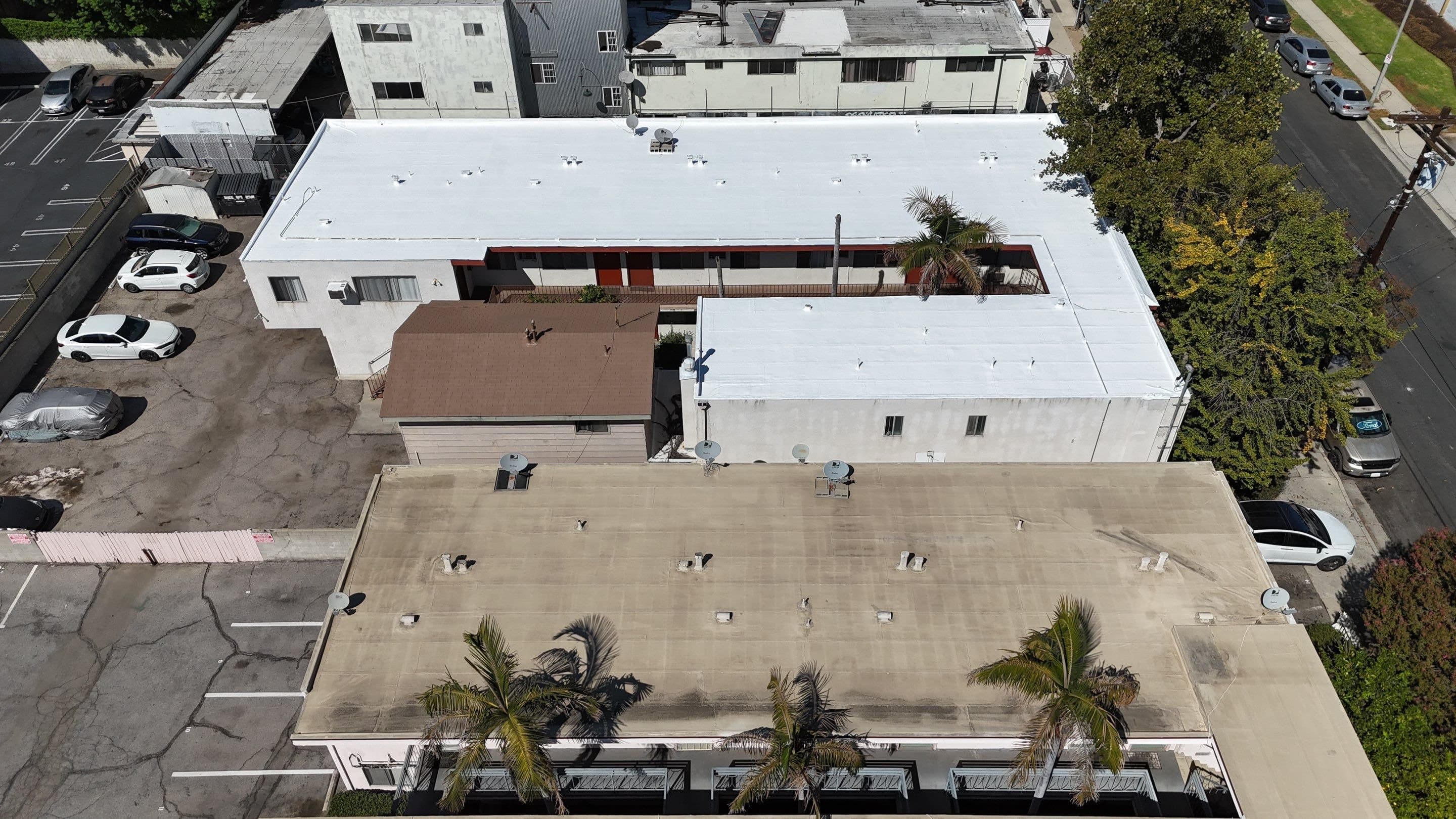
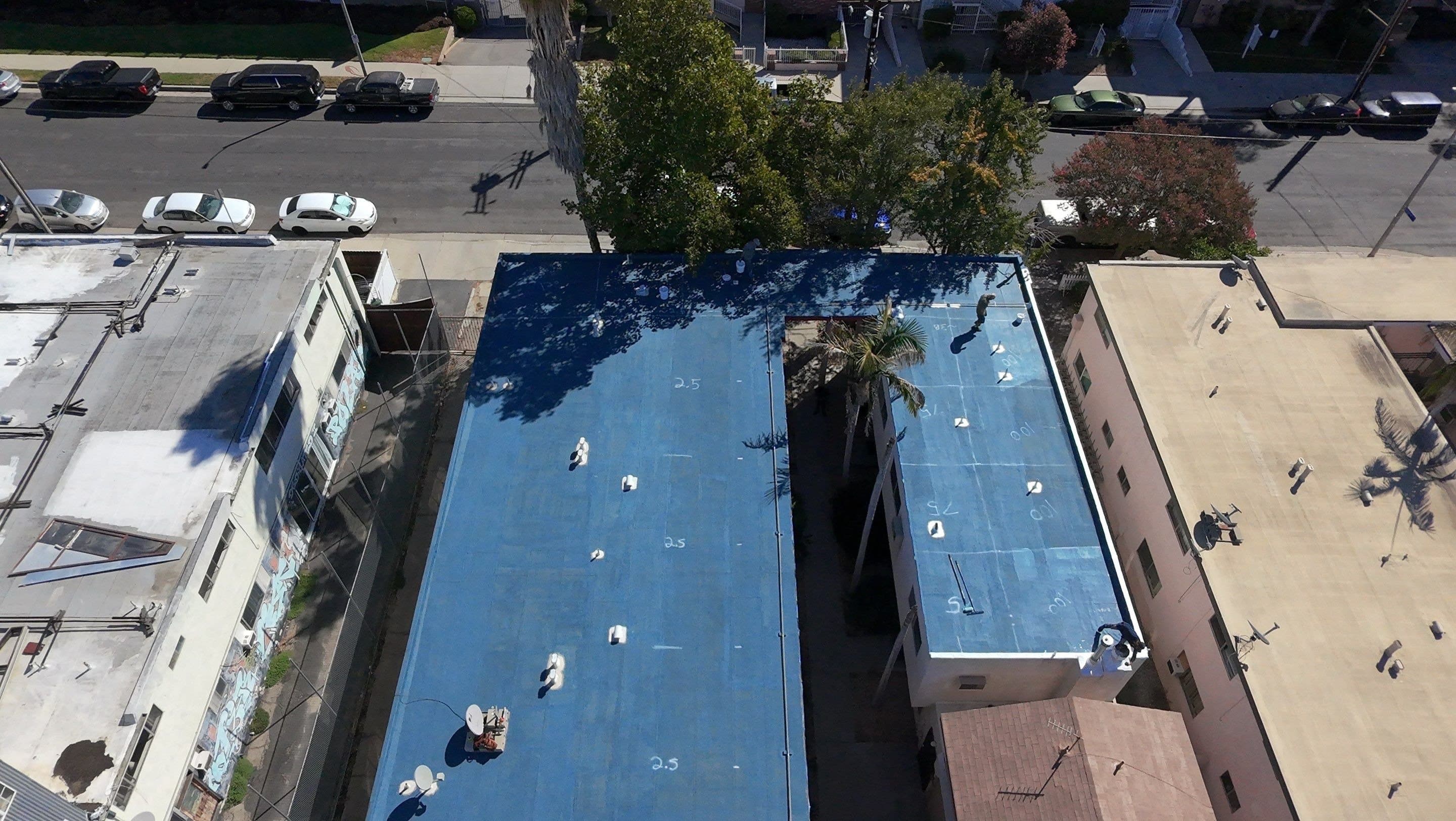
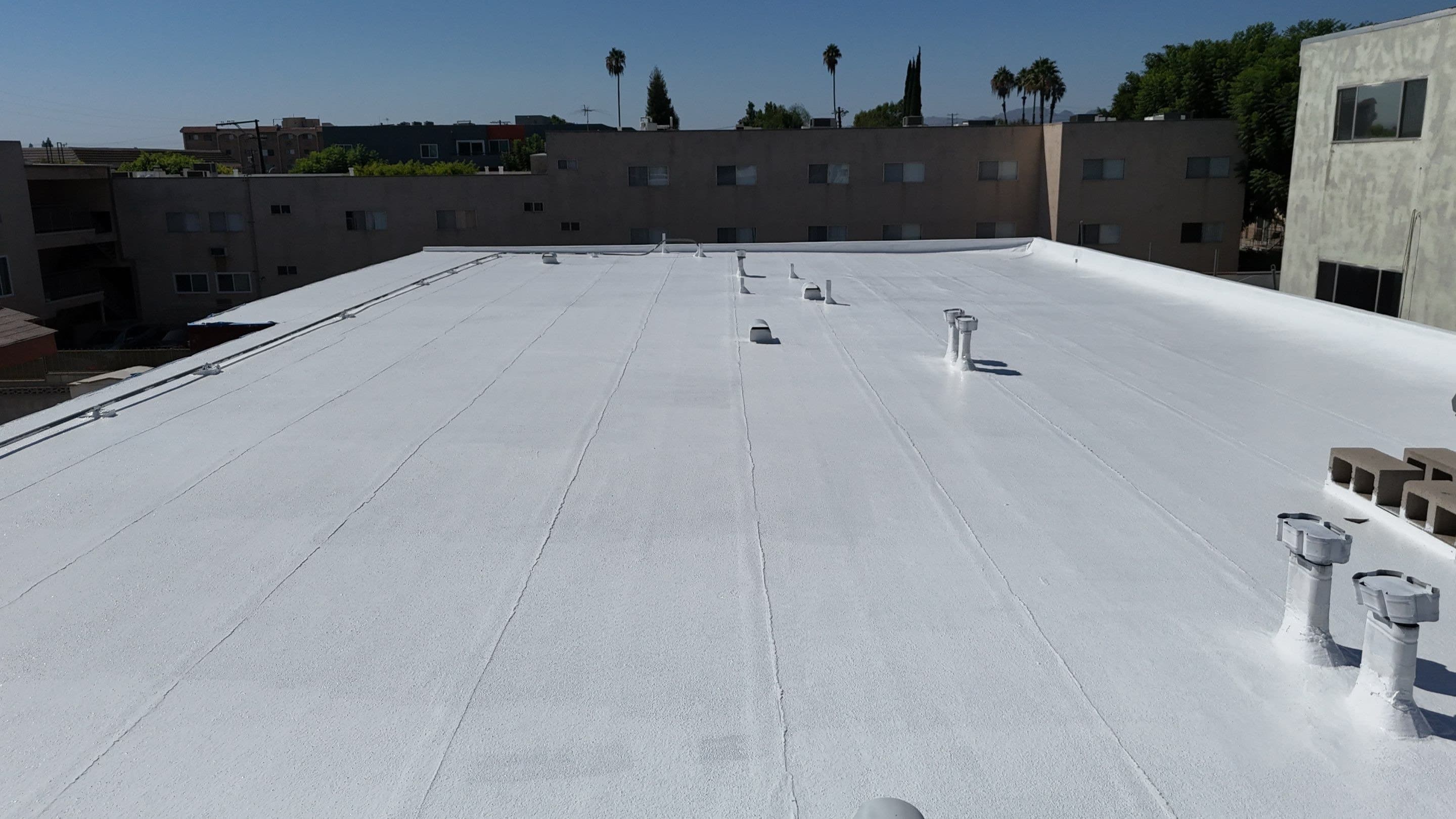
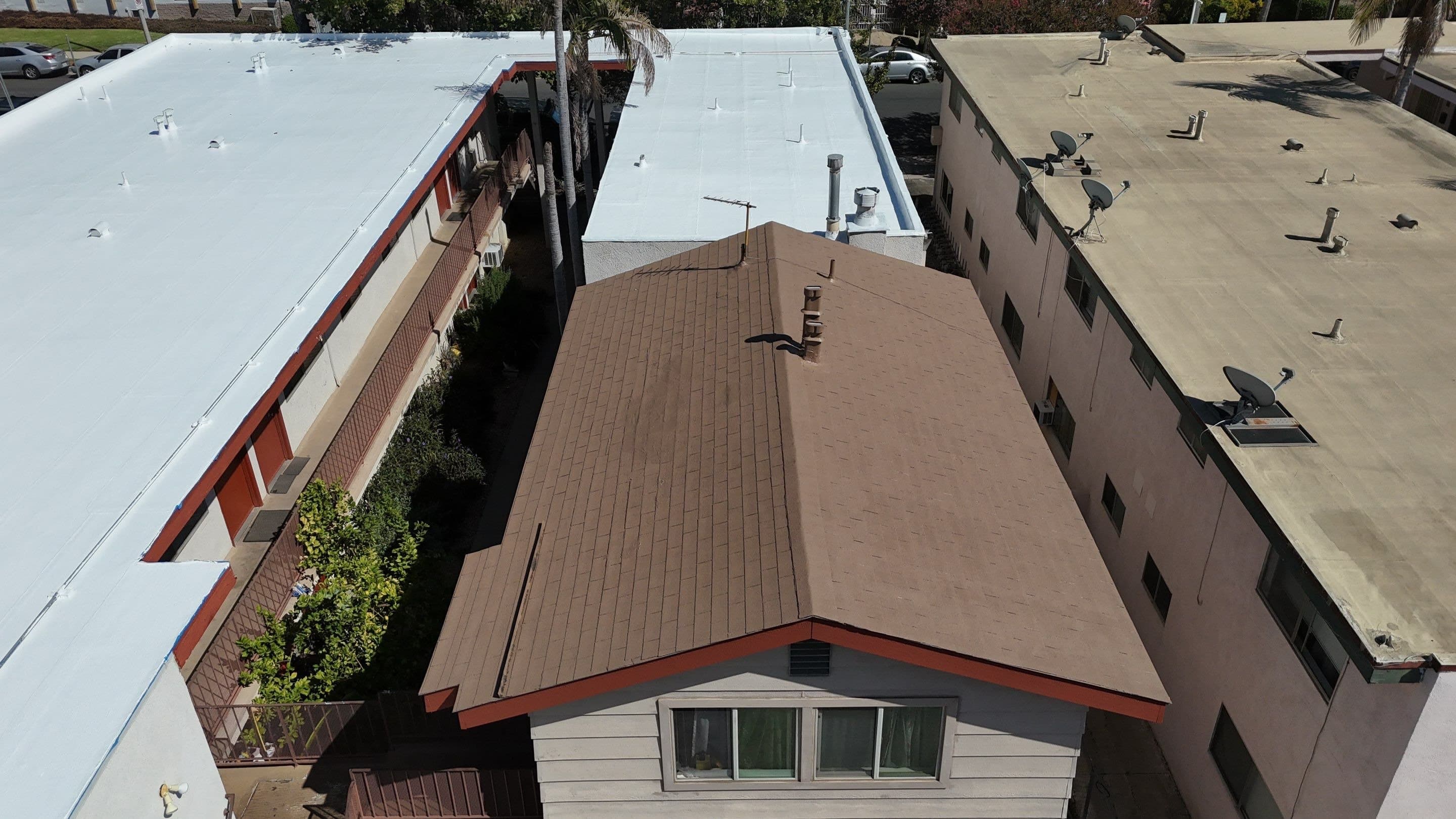
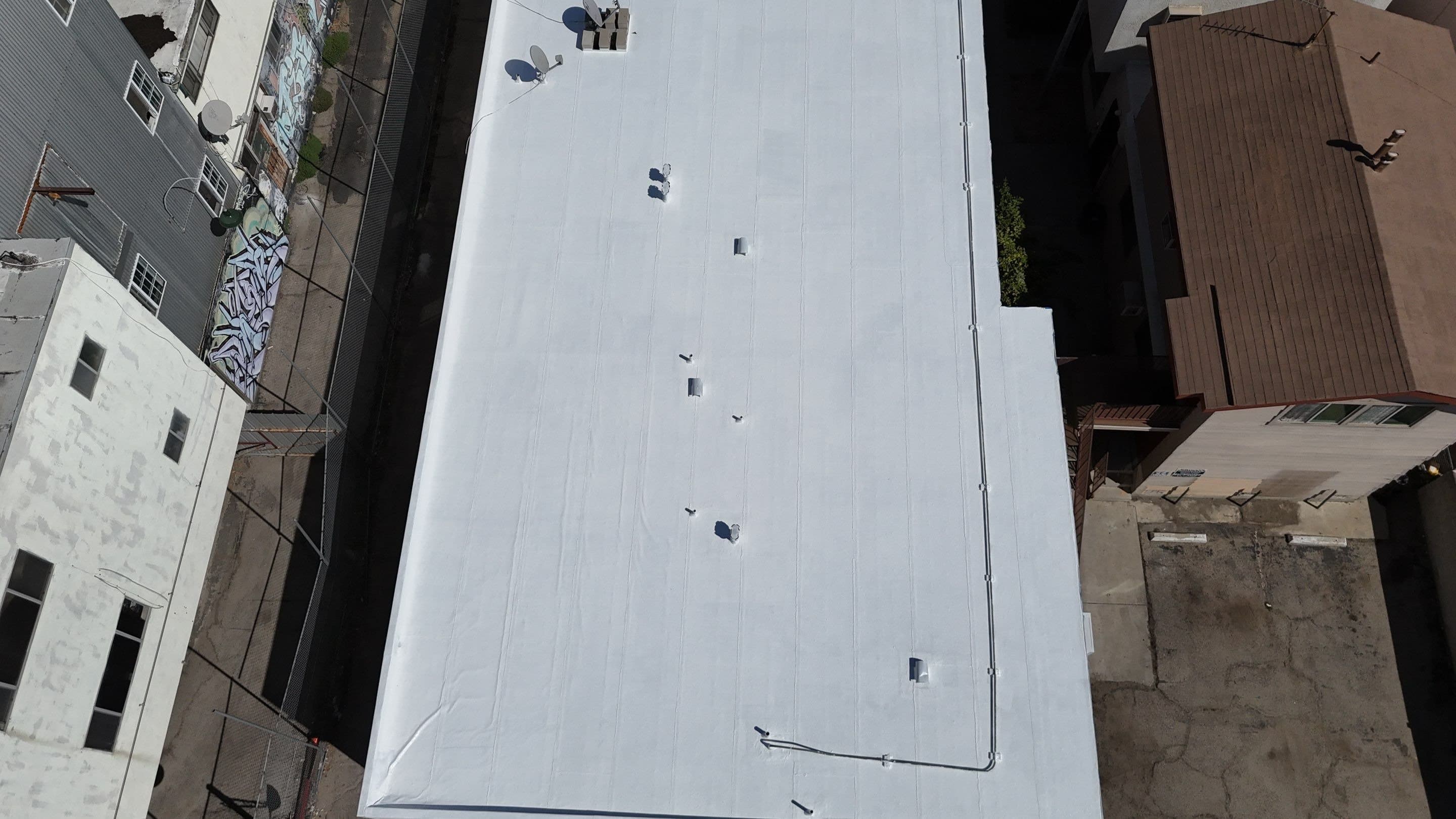
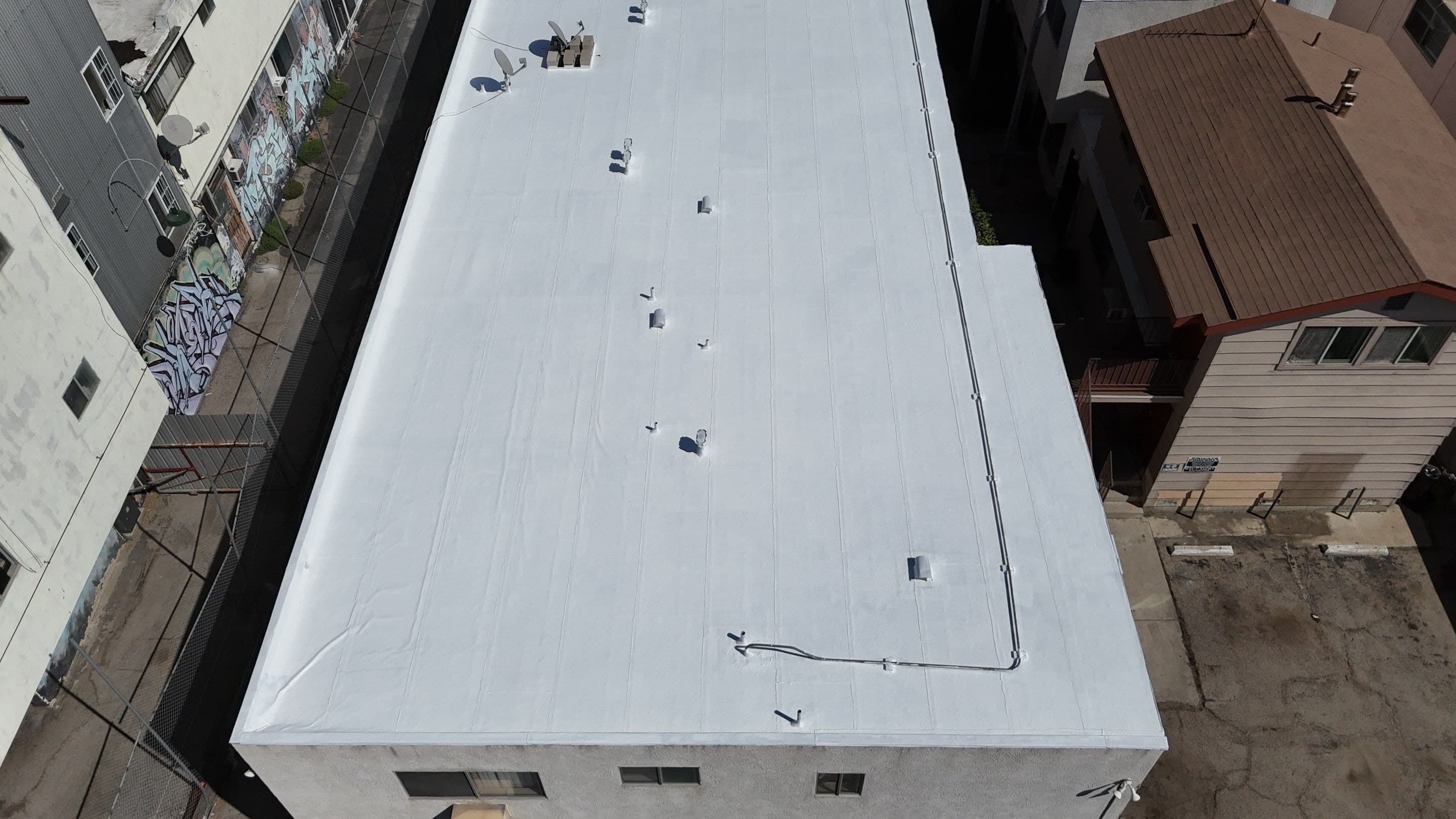
A flat roof over an occupied building doesn't get a tear-off, it gets a plan. This is one we finished in September: a 4,900 square foot flat roof and a detached shingle building on an apartment property in Northridge, inspected in August, prepped and coated in silicone over several working days in September, with the tenants and their cars in place the whole time.
What we found in August
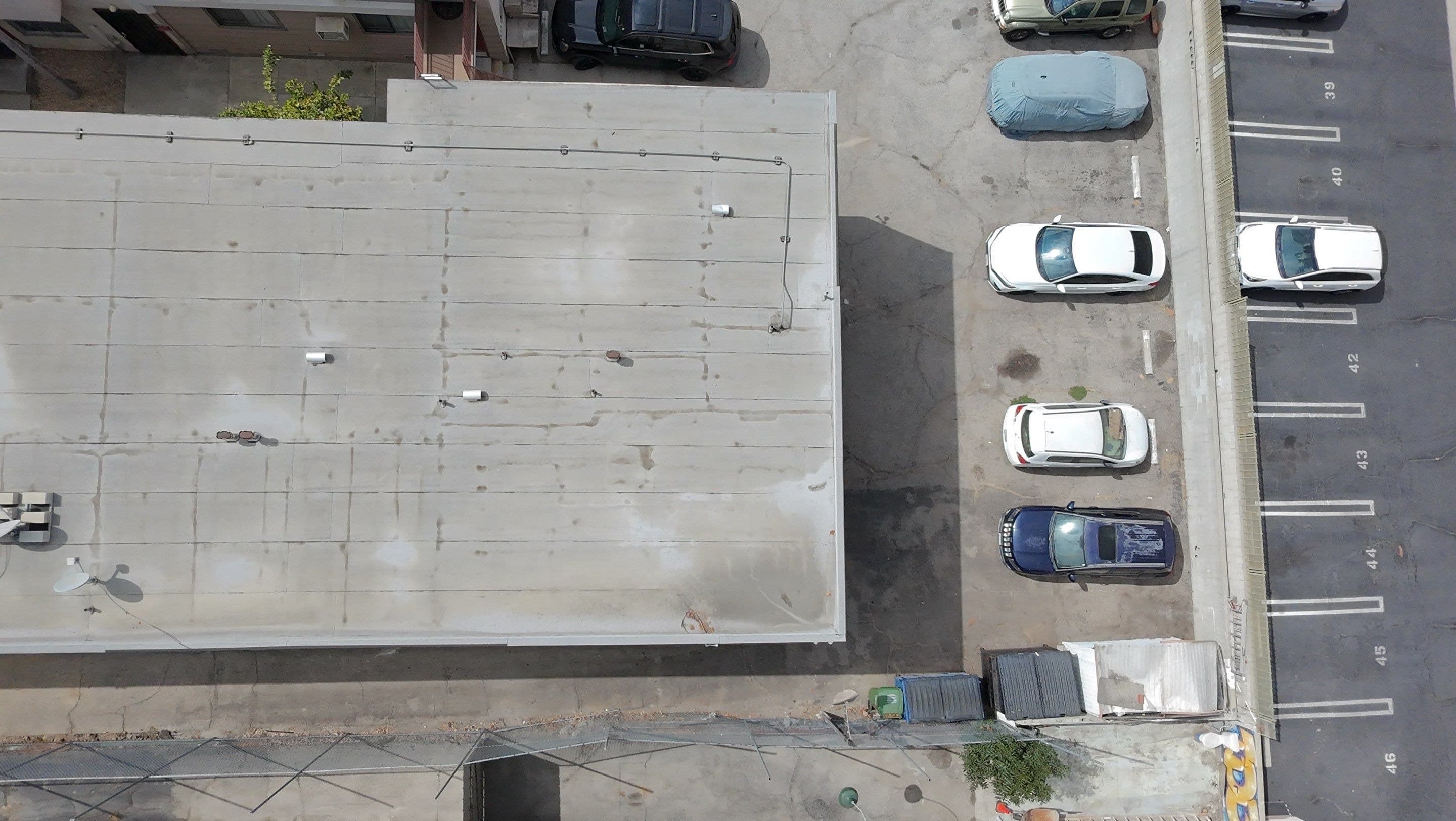
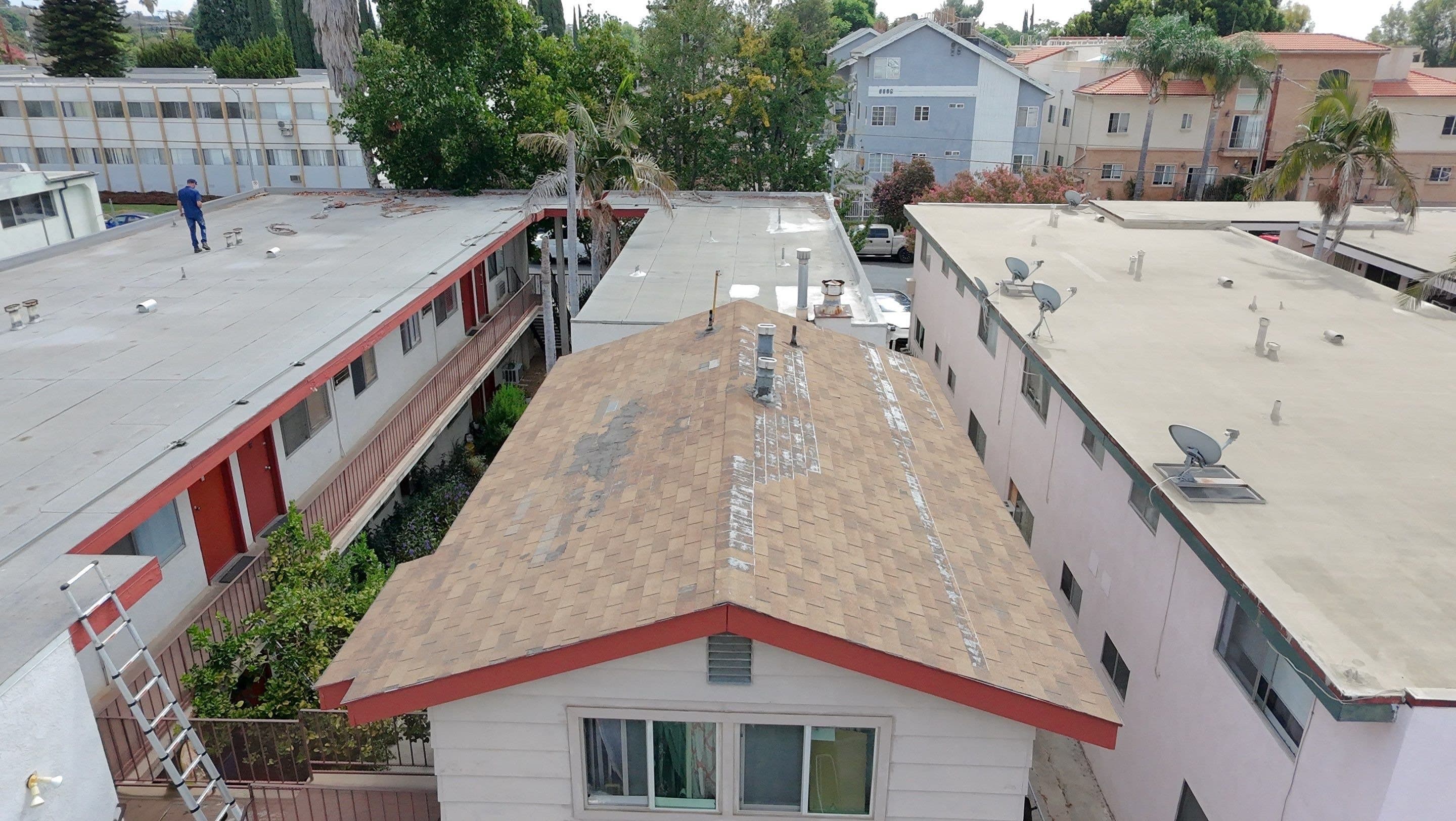
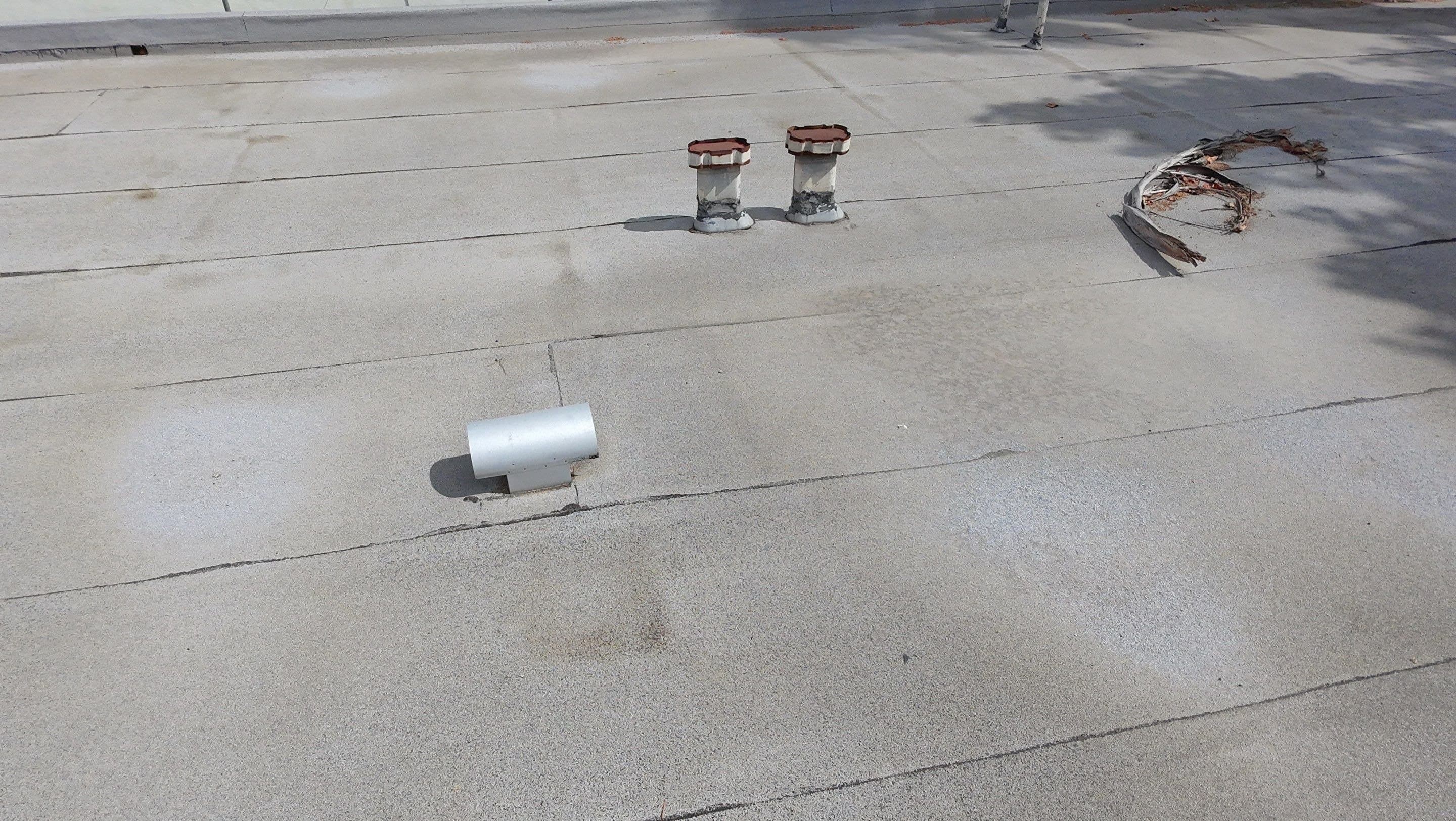
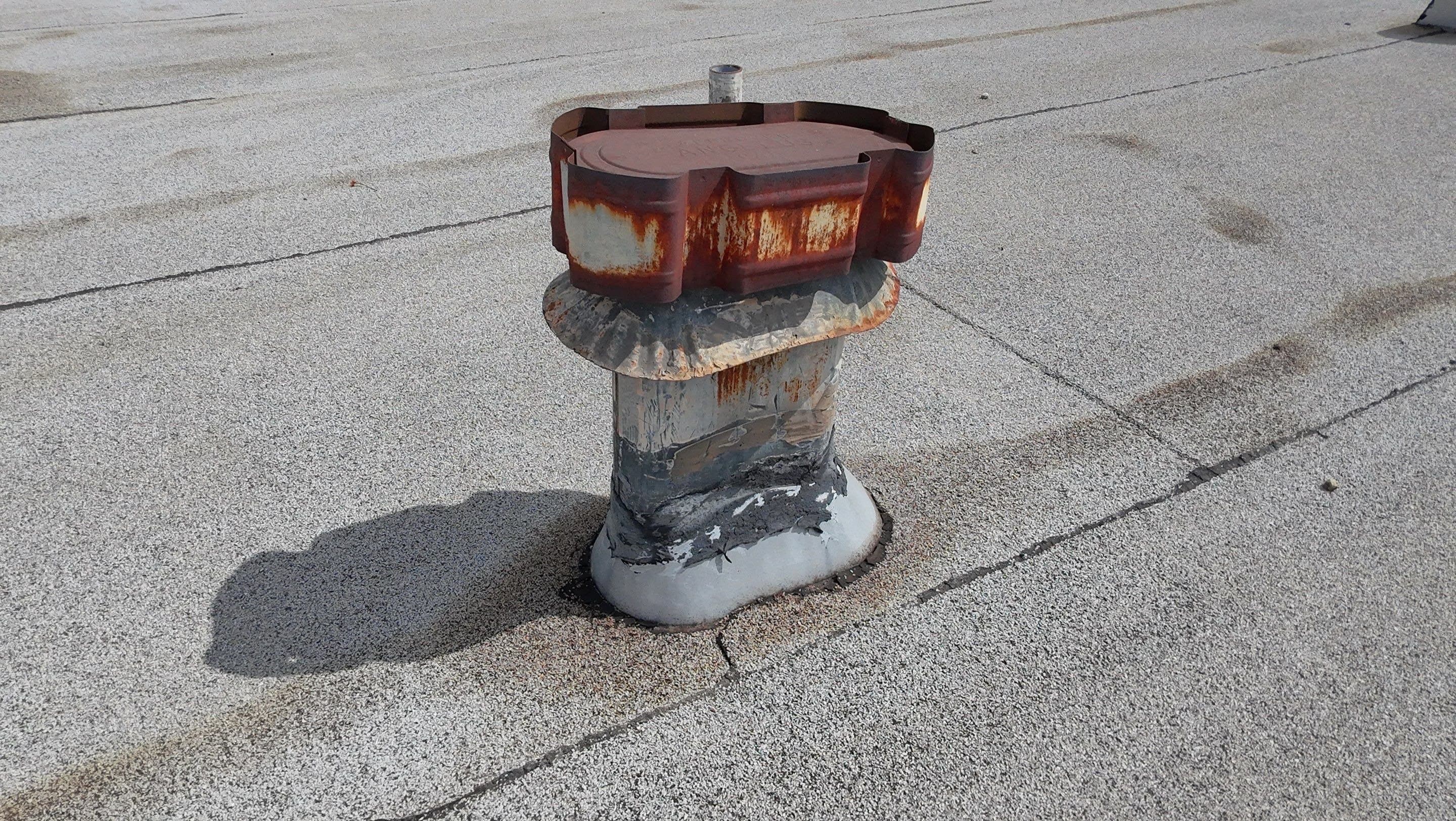
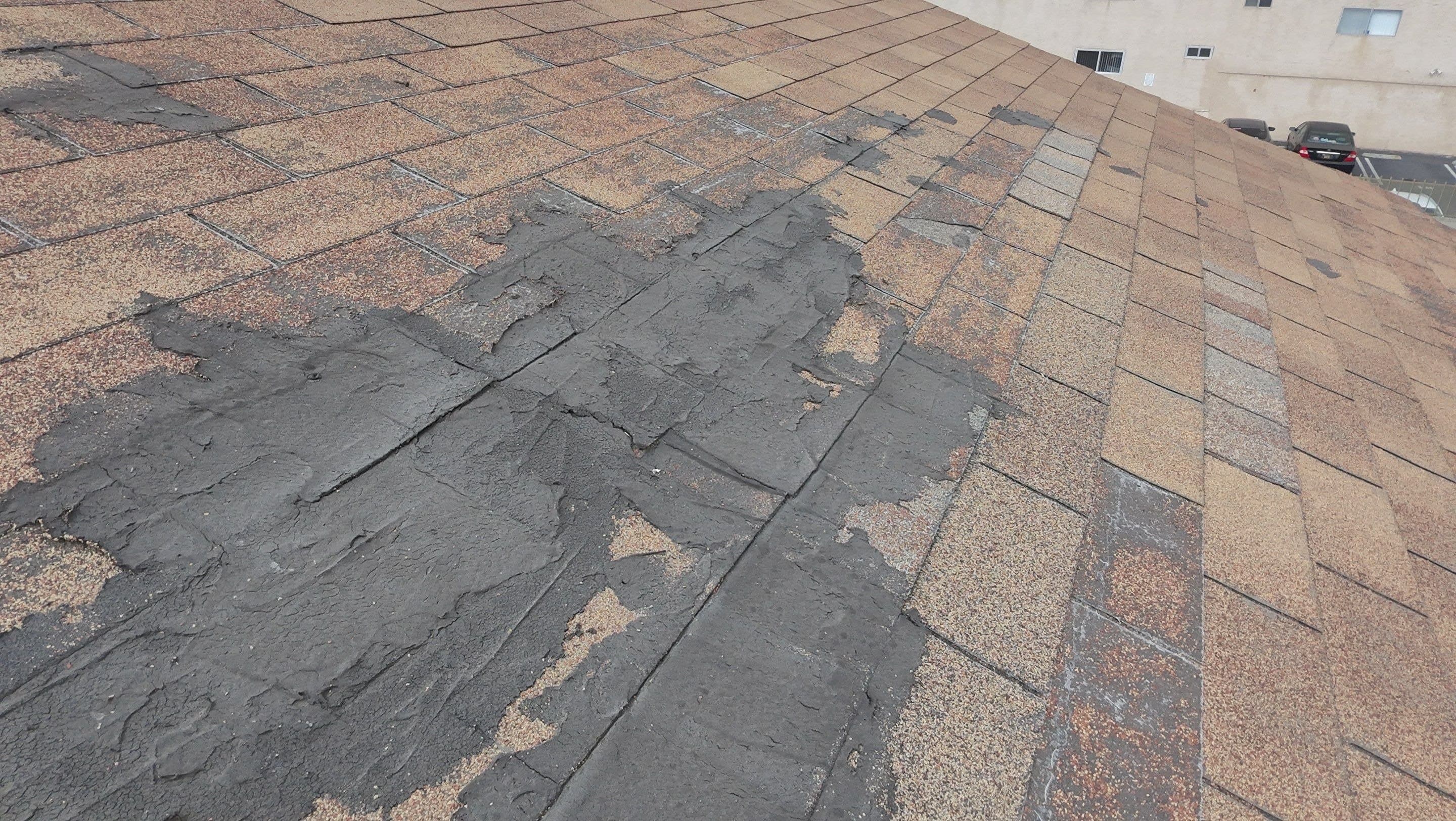
A twenty-plus-year-old cap sheet that had been patched for years instead of fixed. Open laps in the field, corroded vent curbs, debris collecting behind the parapet, and a small detached shingle building next door with mastic smeared over its worst spots. Water was getting through at the seams and the penetrations, which is where a flat roof almost always fails — not out in the middle.
Coating, not replacement
The deck was sound. That is the whole test. When the substrate underneath is still good, a restoration coating — a seamless elastomeric film across the entire roof, every lap and every penetration at once — gives the building a new waterproof surface for a fraction of the cost of tearing it off, without a dumpster in the parking lot or a week of noise over people's apartments. It also turns a dark roof white, which the top-floor units notice first.
One continuous surface
Seams are where flat roofs leak. A coating has none.
The building stays open
No tear-off, no debris chute, no closed parking for a week.
Reflective by default
A white silicone roof meets California's Title 24 cool-roof requirement for low-slope commercial roofs.
The wash changed the spec
We cleaned the roof first — blow-off and a soft wash — and the clean deck showed something the dirty one hid: water standing in a few low spots after it drained. An acrylic coating doesn't like standing water. Silicone does. So before a drop of product went on, the flat roof moved from an acrylic system to silicone, and we talked the owner through adding drainage. That is the order it should happen in: find the water, then pick the product.
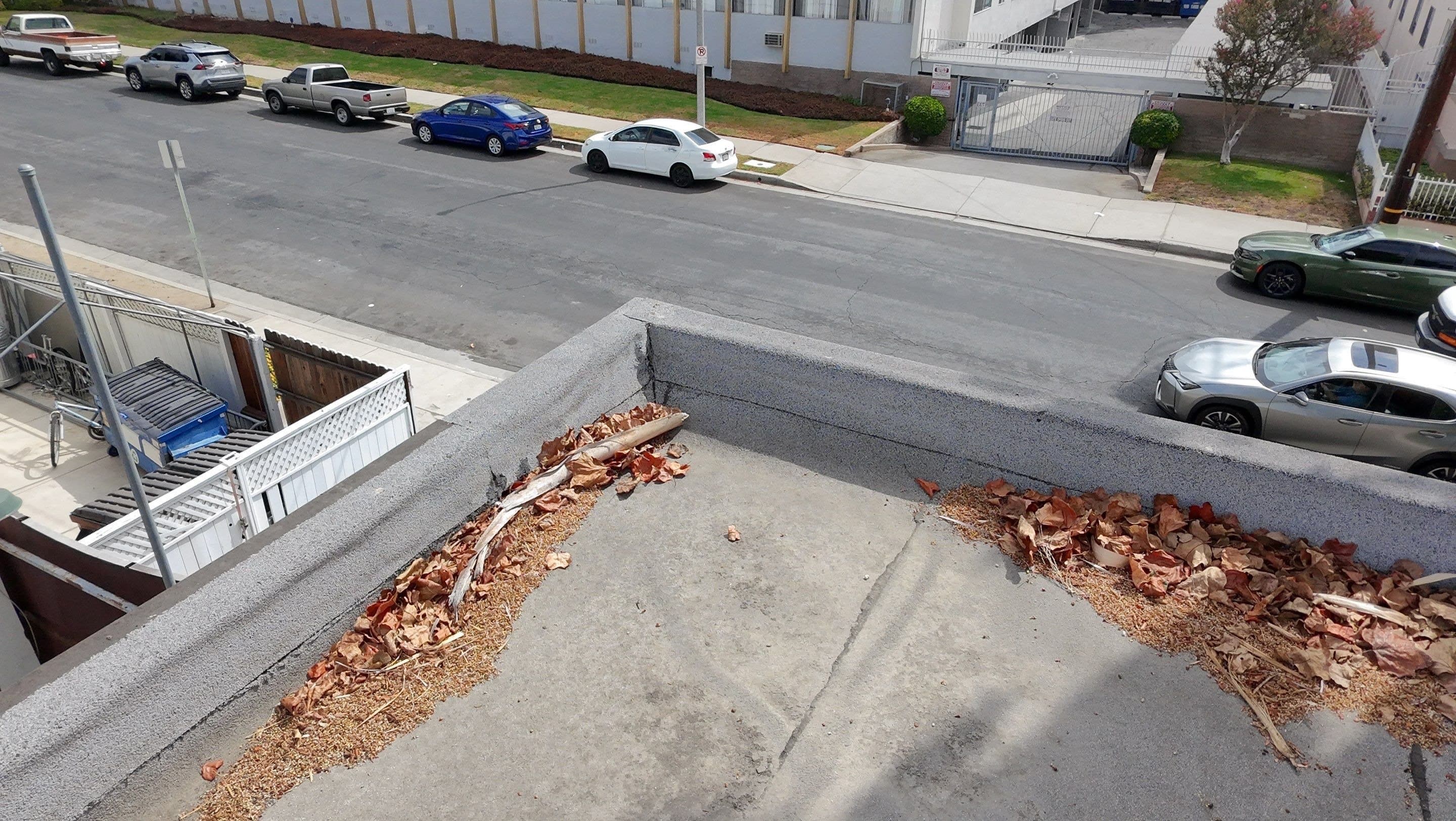
Prep is most of the job
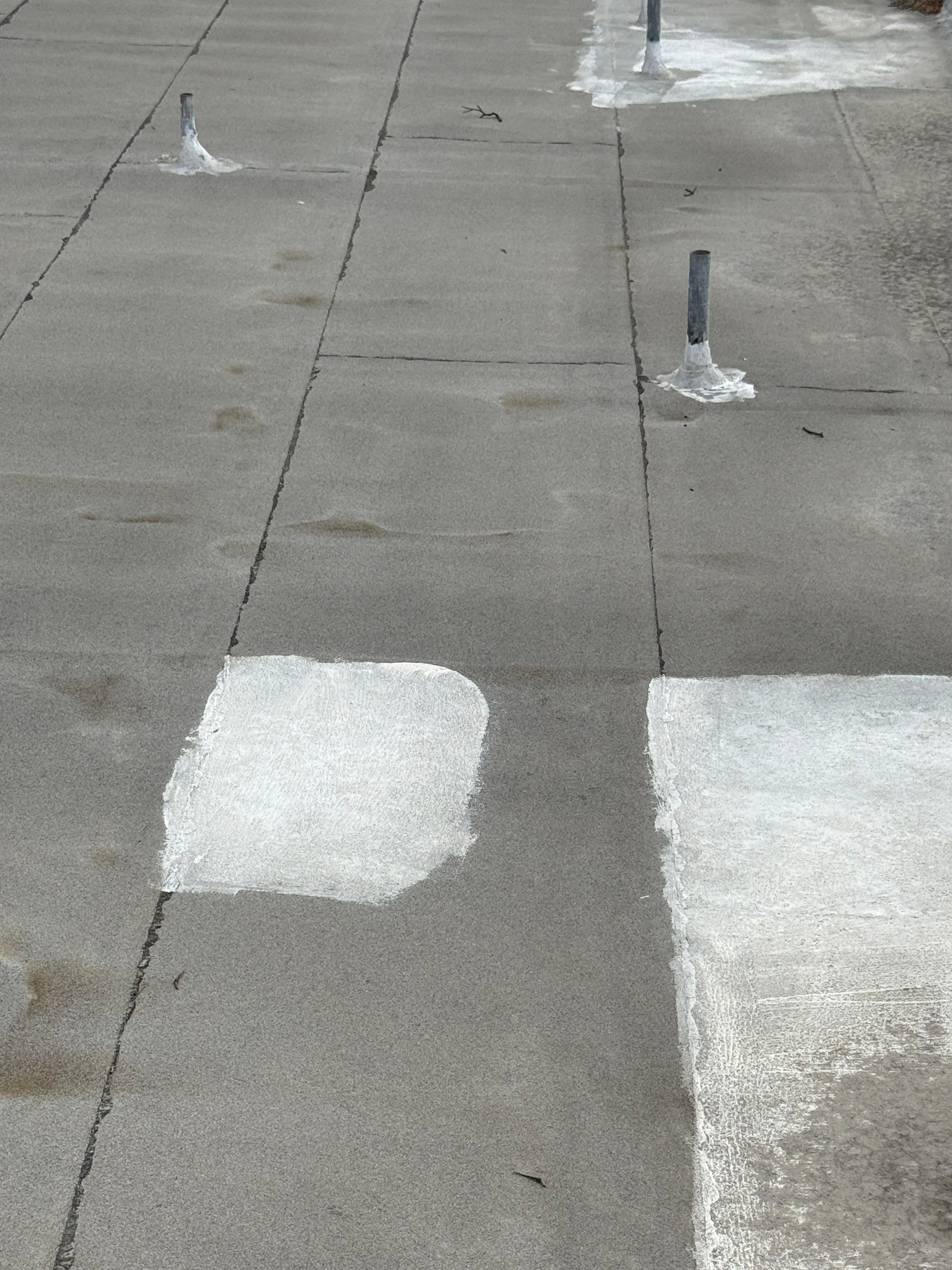
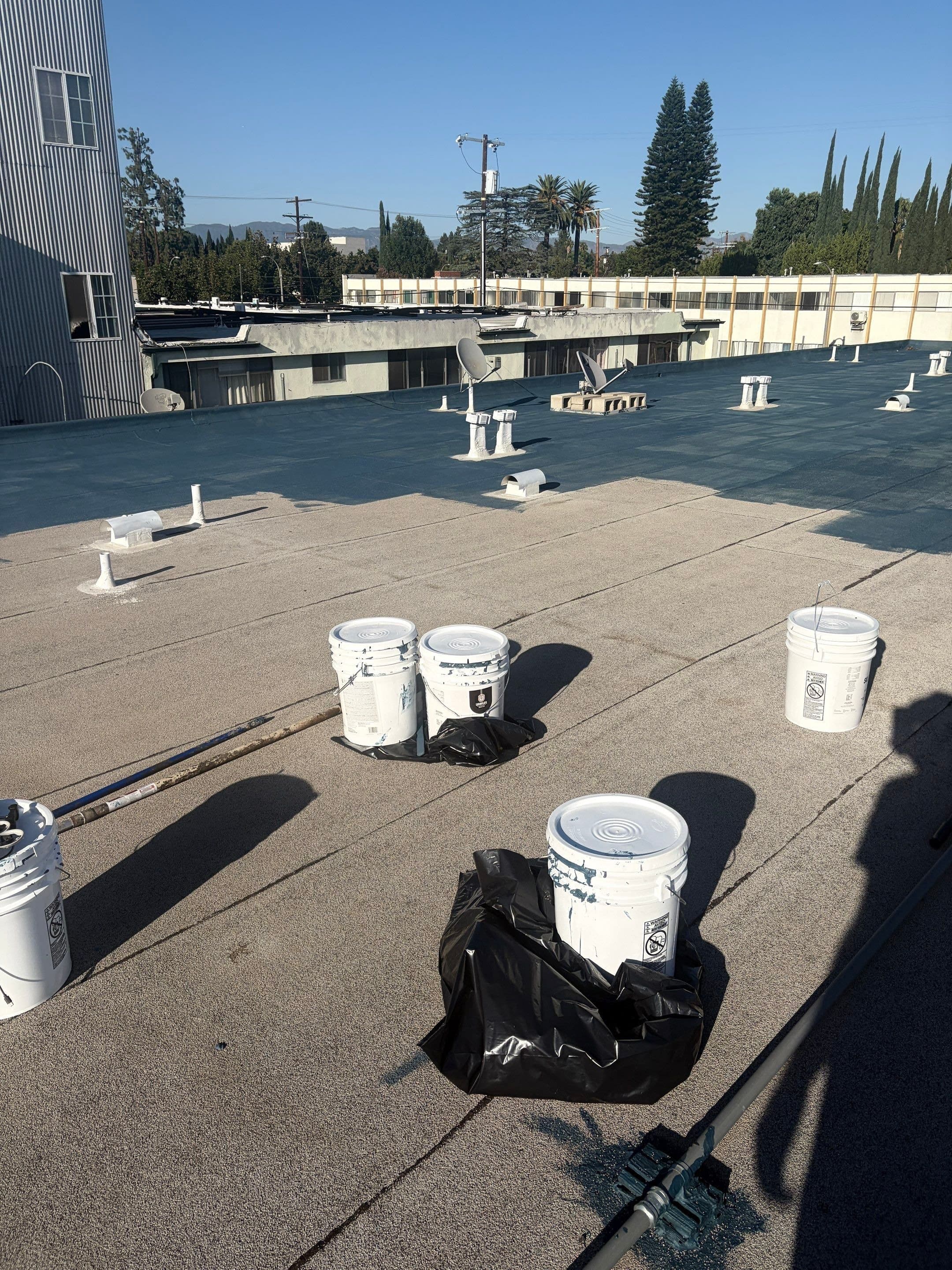
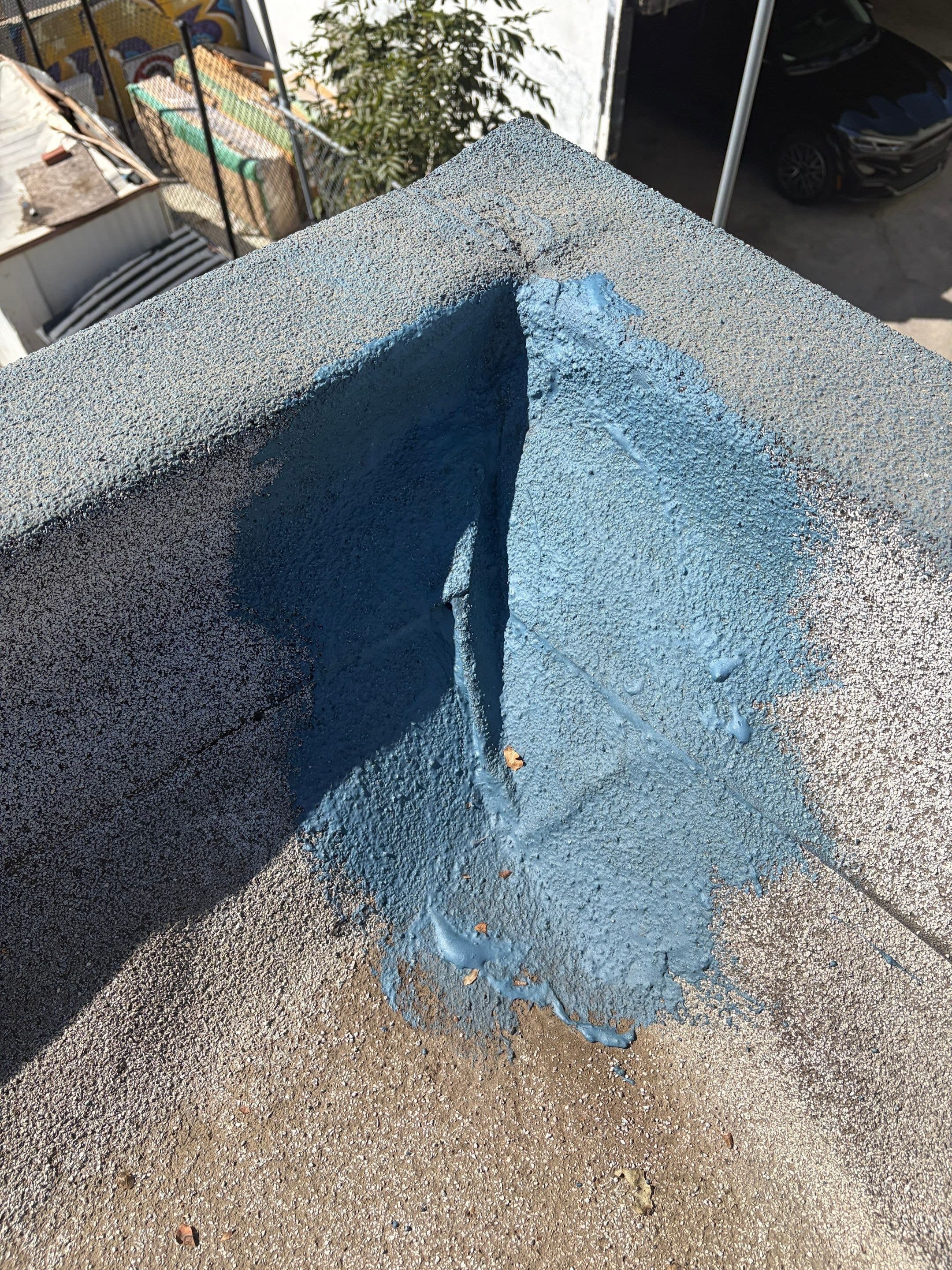
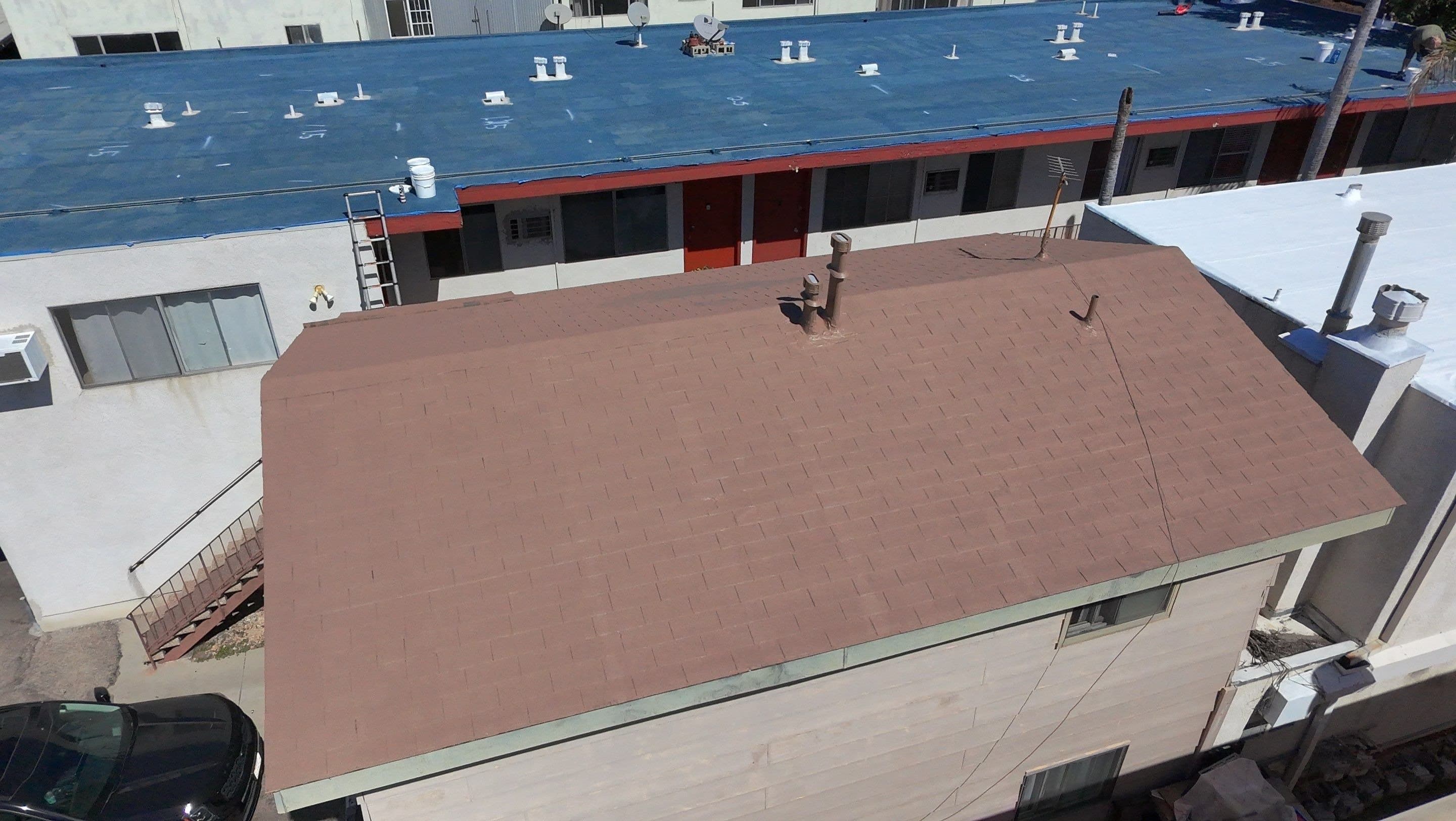
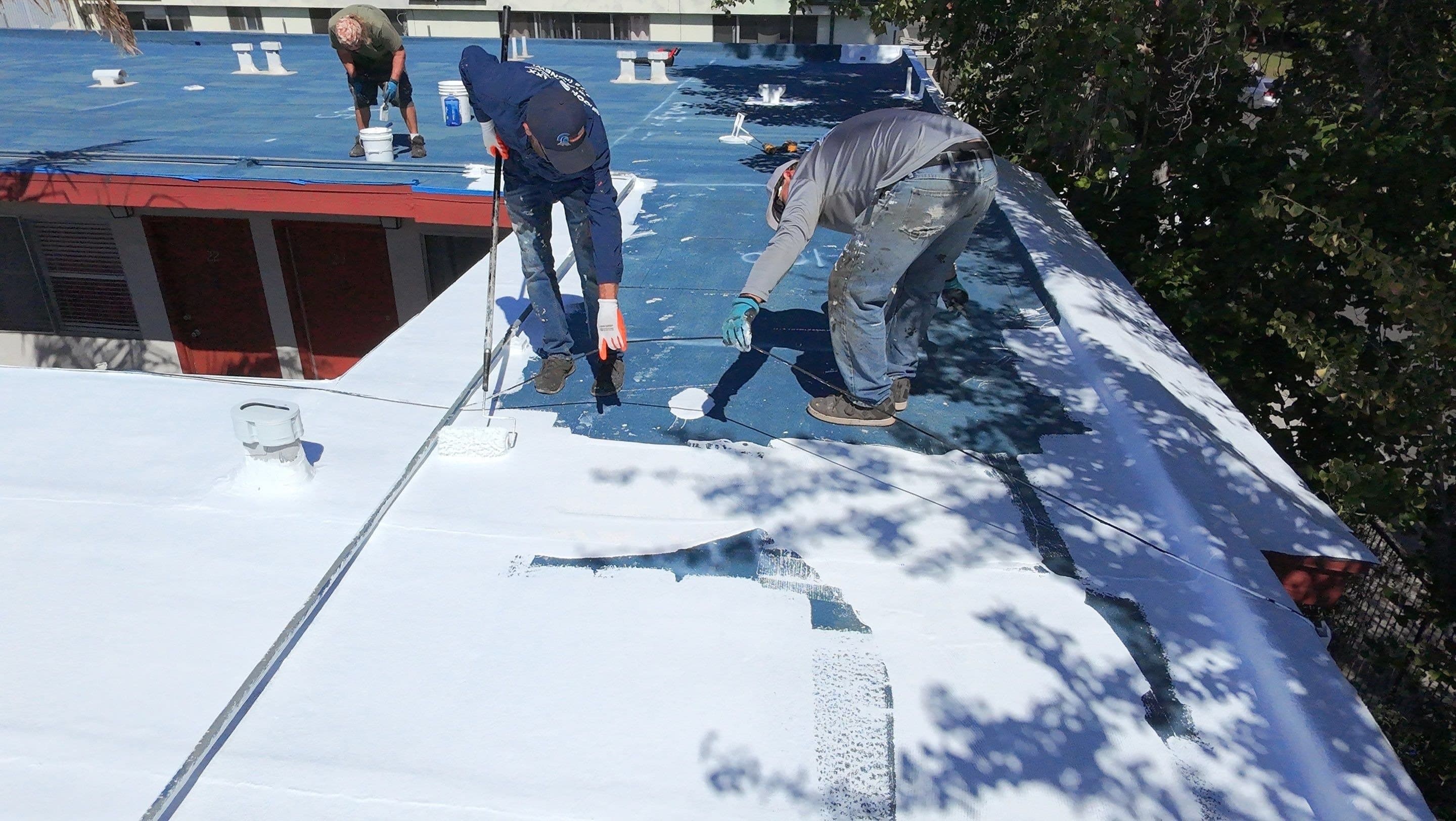
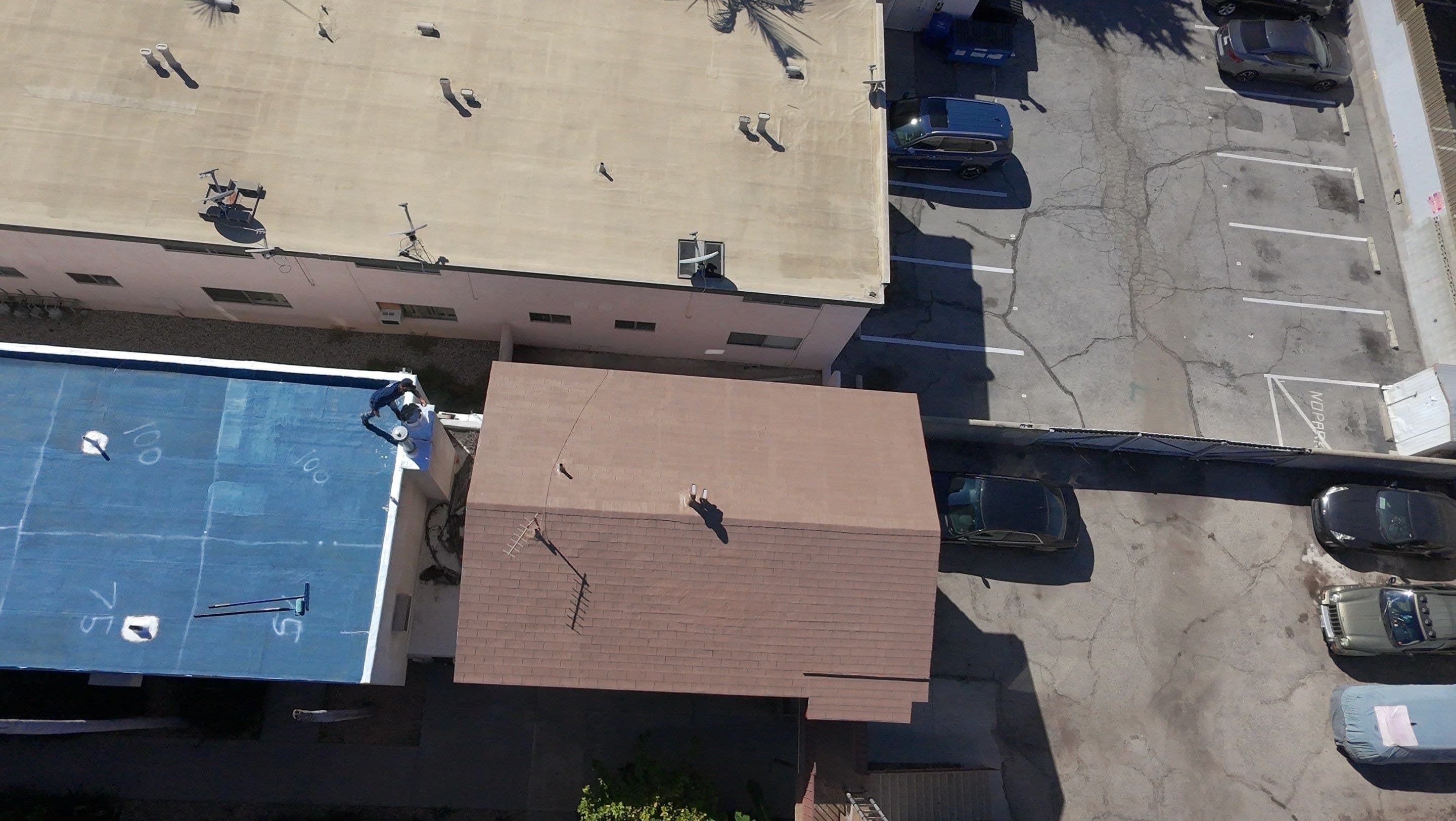
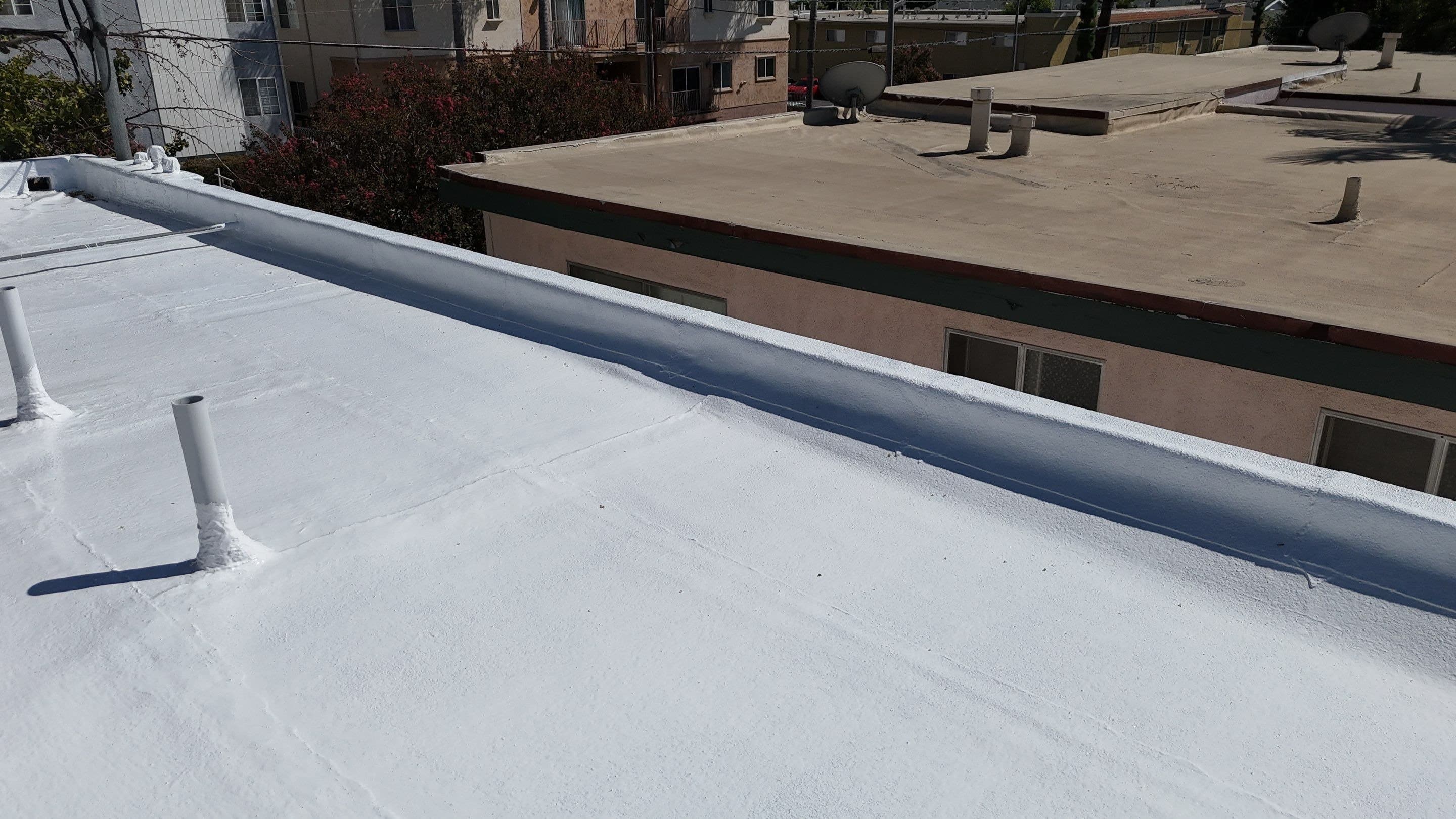
Every curb, pipe, and corner got reinforced and sealed before the field was touched. Seams were base-coated first. The detached shingle building got a full tune-up — missing and broken shingles replaced — and then its own acrylic elastomeric coating over the whole roof.
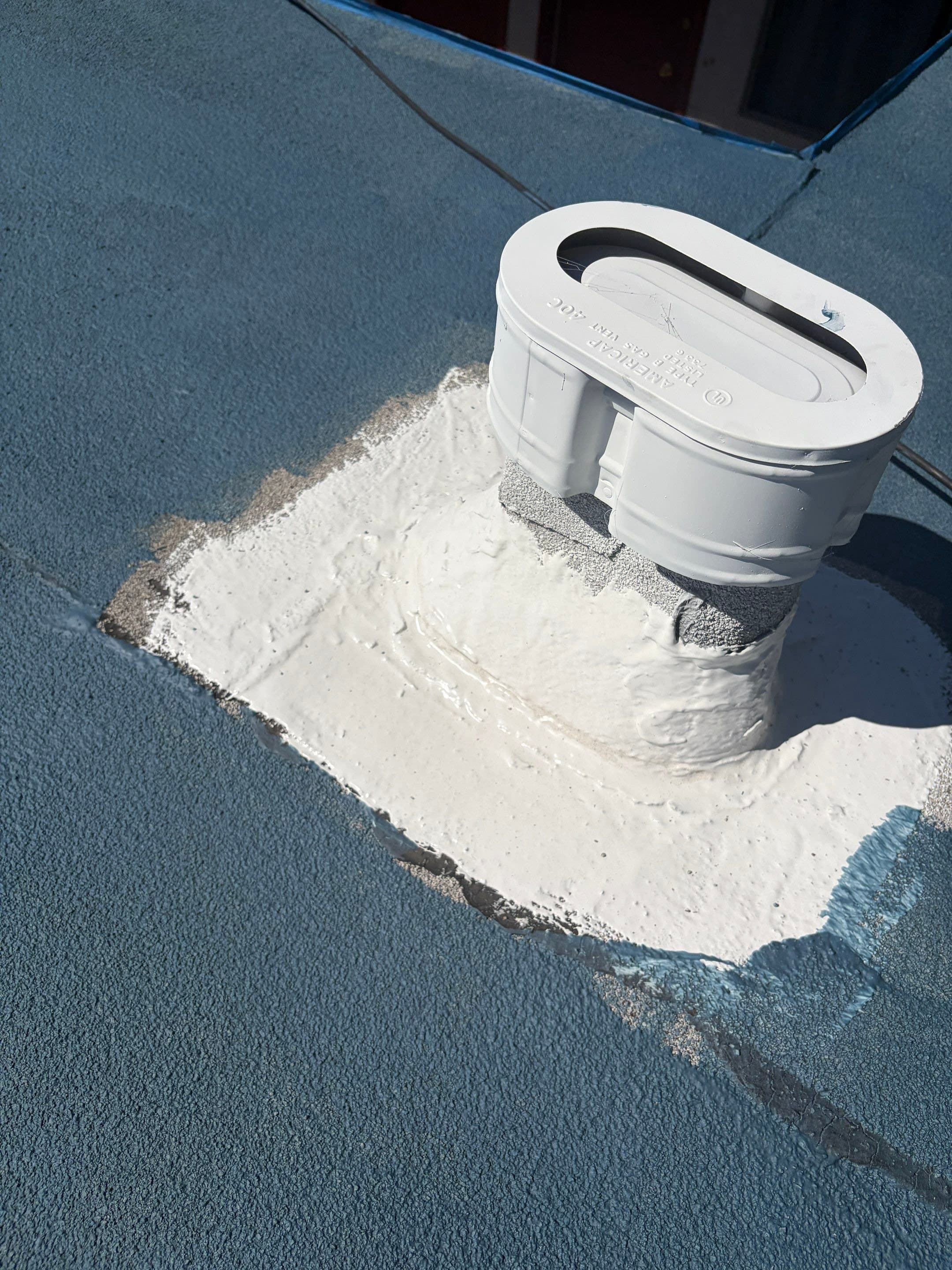
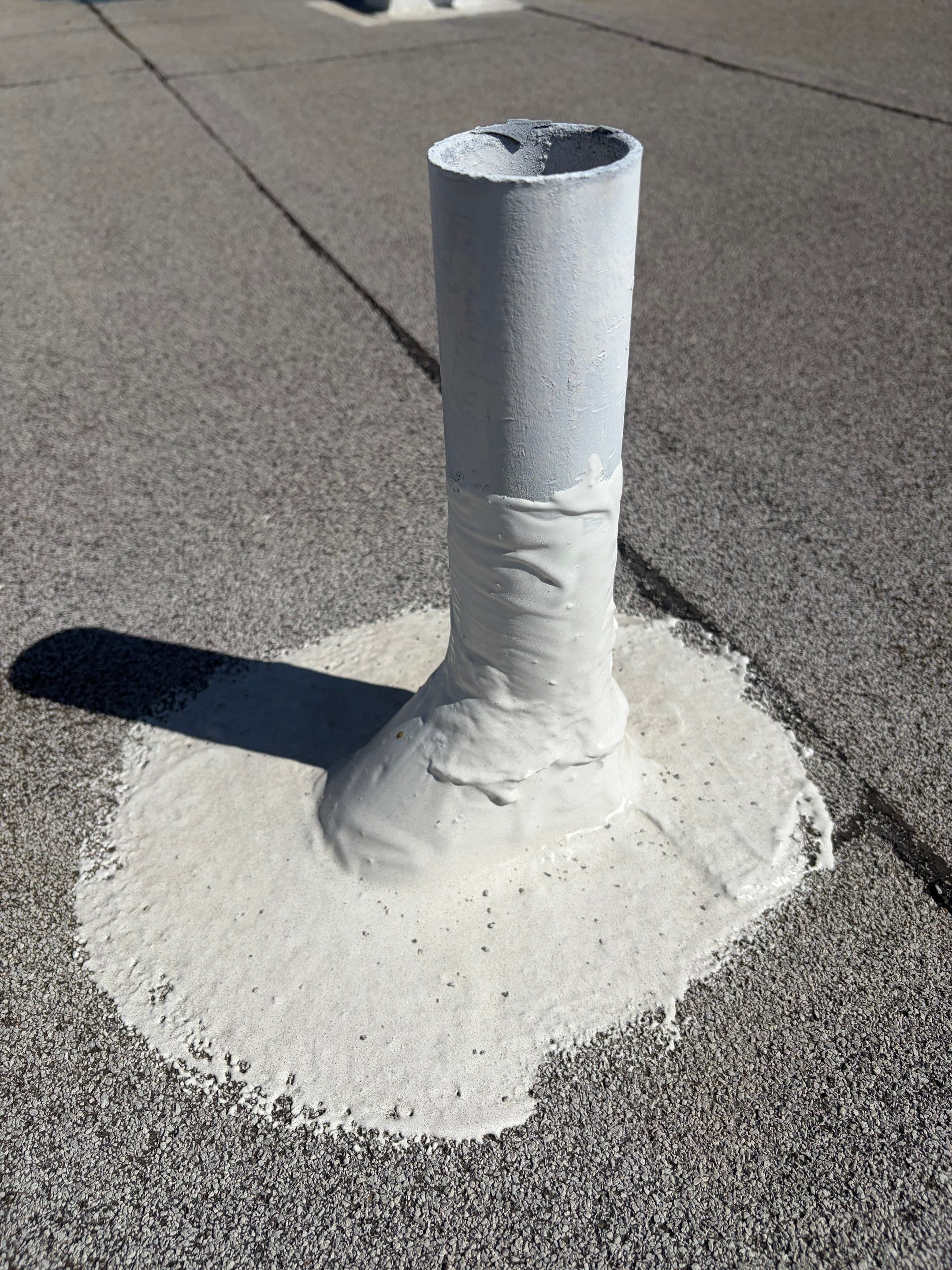
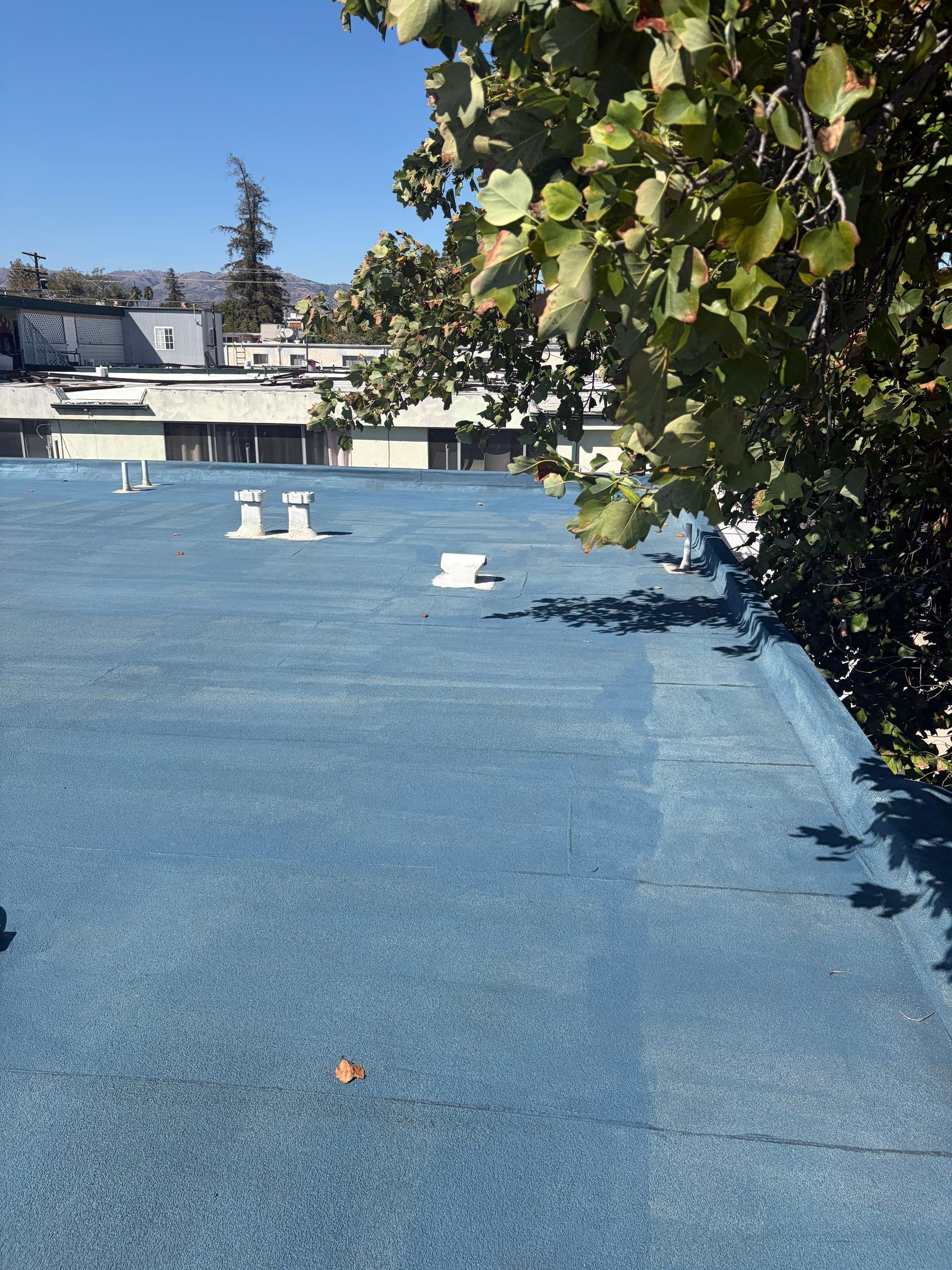
Base coat, then top coat
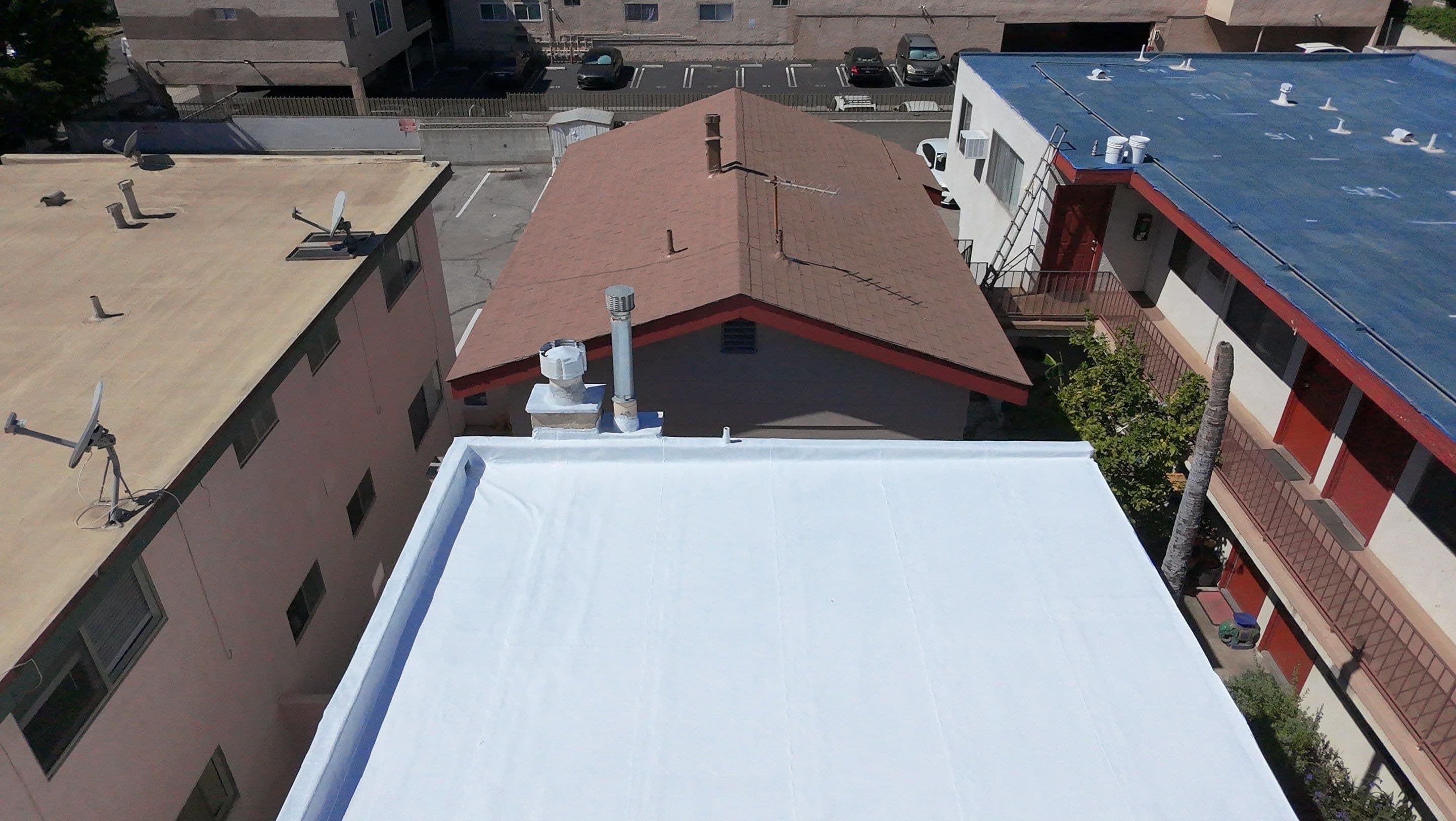
The silicone went on in two passes. The blue base coat covers the whole deck and shows exactly where the top coat hasn't been yet, so nothing gets missed. The white top coat is the finished surface.
Finished
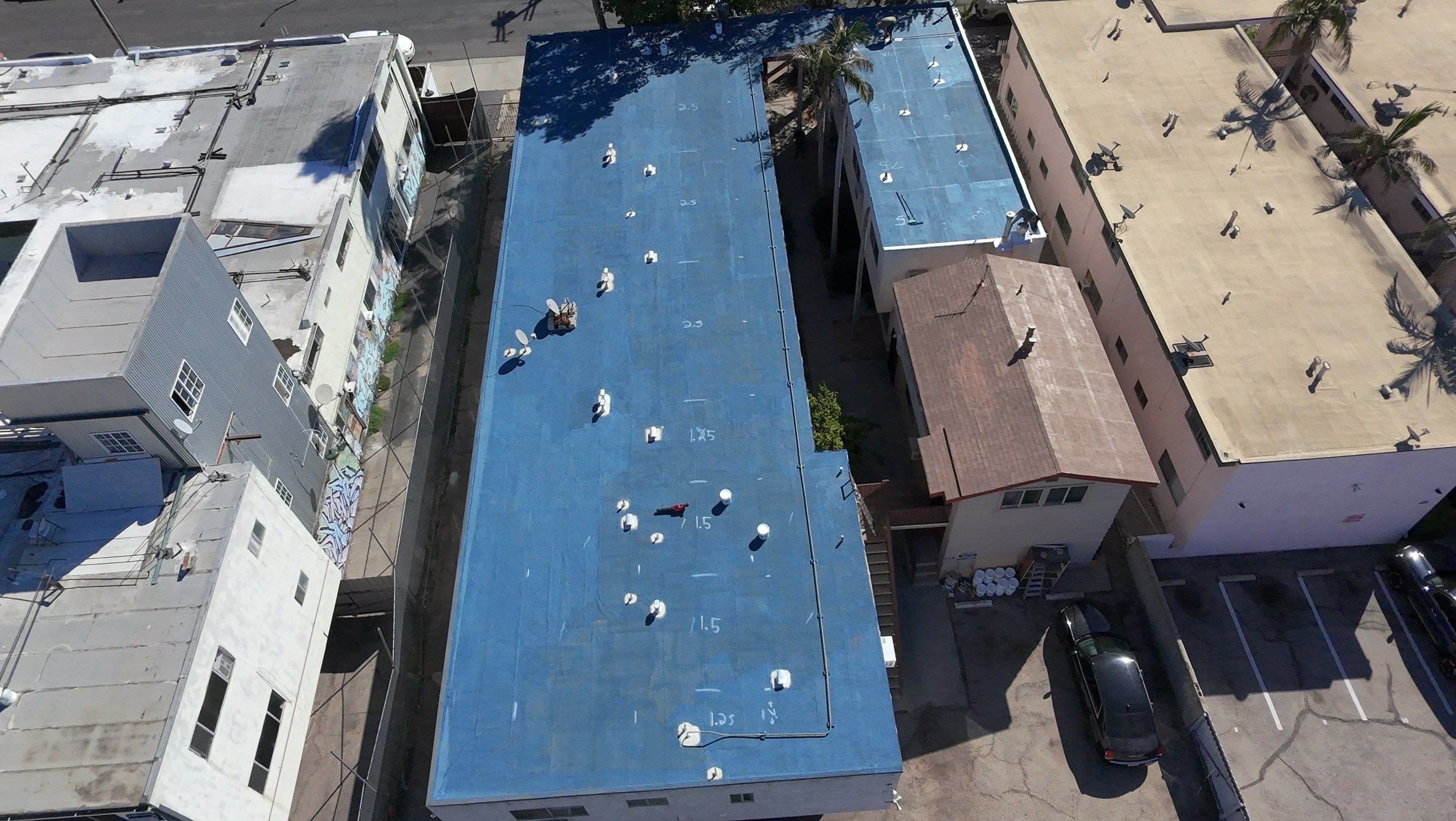
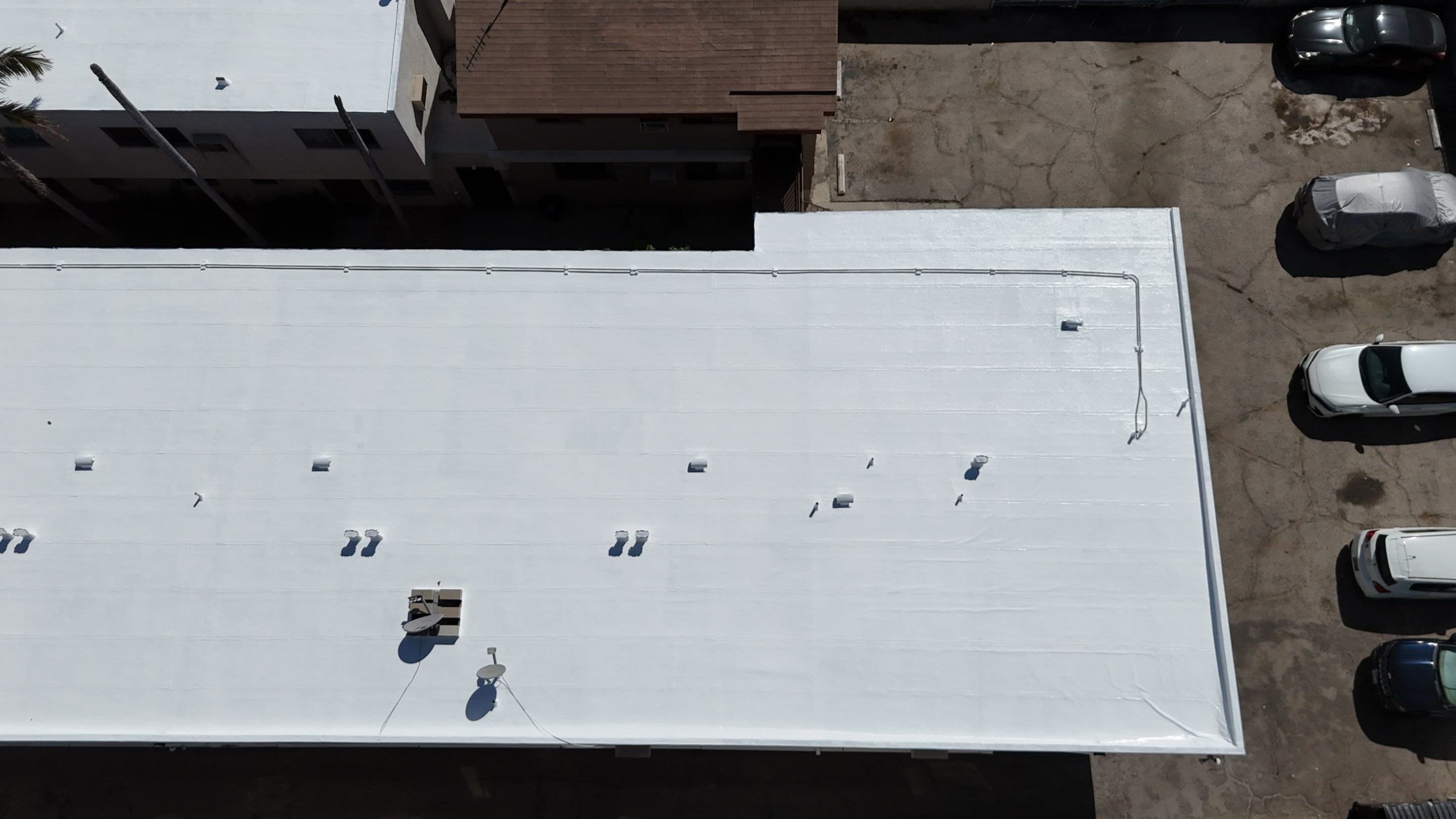
Same roof, same angle, seven weeks apart.
Before
After
What the owner gets
A warranty on both
Our workmanship warranty plus the manufacturer's registered warranty on the silicone system.
A file, not a handshake
Dated photos of every stage, from the first inspection to the last pass, written for whoever has to approve the spend.
A maintenance plan if you want one
Annual visits with photos, so the drains stay clear and the next decision is a small one.
Annual maintenance planIs your building a candidate?
Flat and low-slope roofs on apartment buildings, small commercial, retail, and HOA common buildings across Los Angeles and Ventura County. The assessment is on the roof, with photos, and it tells you honestly whether the deck will take a coating or whether it's time for something bigger.
Request a commercial assessmentCall (805) 787-3639
How restoration coatings work →HOA, multifamily & portfolios →